

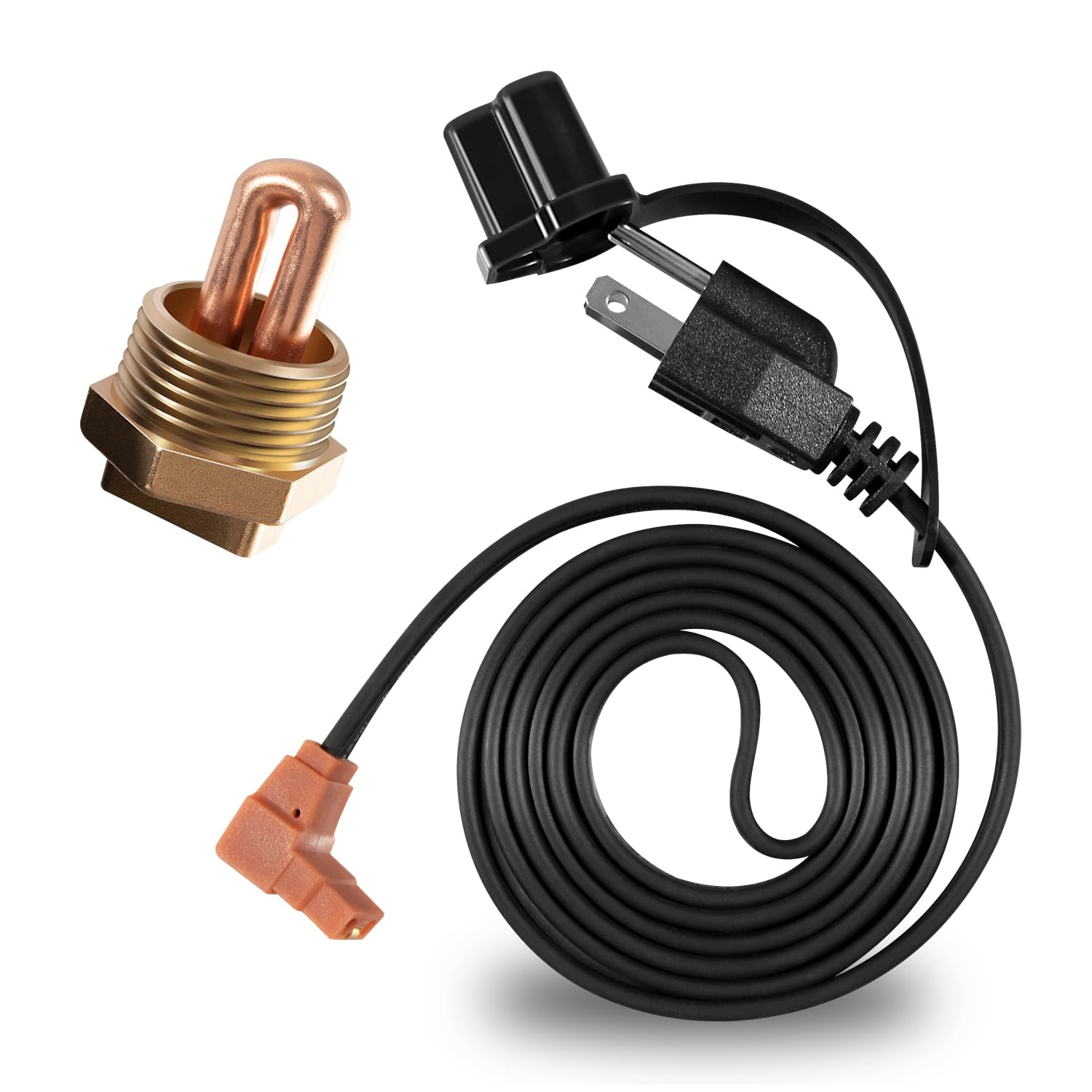
When winter temperatures plummet and your engine refuses to turn over, you quickly realize the value of a reliable engine block heater. The Engine Block Immersion Heater (Model 3100003/310-0003) has emerged as a popular solution for drivers facing harsh cold-weather conditions. After thorough research and analysis of this product, I’m providing an in-depth review to help you determine if this heater is the right choice for your vehicle’s winter needs.
Product Overview: What You Need to Know
The Engine Block Immersion Heater 3100003/310-0003 is a freeze plug-style heating device designed to warm your engine’s coolant before starting in cold weather. Unlike some competing products that attach externally or use magnetic mounting, this immersion heater installs directly into your engine block through a 1″ NPT (National Pipe Thread) port, providing direct contact with the coolant for superior heating efficiency.
This heater serves one critical purpose: preventing the damaging effects of cold starts by pre-warming your engine to a temperature where oil flows freely, metal components are properly expanded, and combustion occurs efficiently. For anyone living in regions where winter temperatures regularly drop below freezing, this type of device isn’t just a convenience—it’s essential protection for your engine investment.
Key Specifications and Features
Understanding the technical specifications helps you determine if this heater matches your vehicle’s requirements and your climate conditions.
Power and Performance Specifications
The heater operates on standard household current at 120 volts and draws 400 watts of power. This wattage places it in the lower-to-middle range of engine block heaters, making it ideal for smaller to medium-sized engines, particularly four-cylinder and smaller six-cylinder applications.
The 400-watt rating means this heater strikes an excellent balance between heating effectiveness and electricity consumption. It’s powerful enough to warm your engine adequately in moderately cold to severely cold conditions (down to approximately -20°F or -29°C) while consuming less electricity than higher-wattage alternatives. Running this heater for the recommended 3-4 hours before starting costs only about $0.20-$0.30 in electricity at average rates.
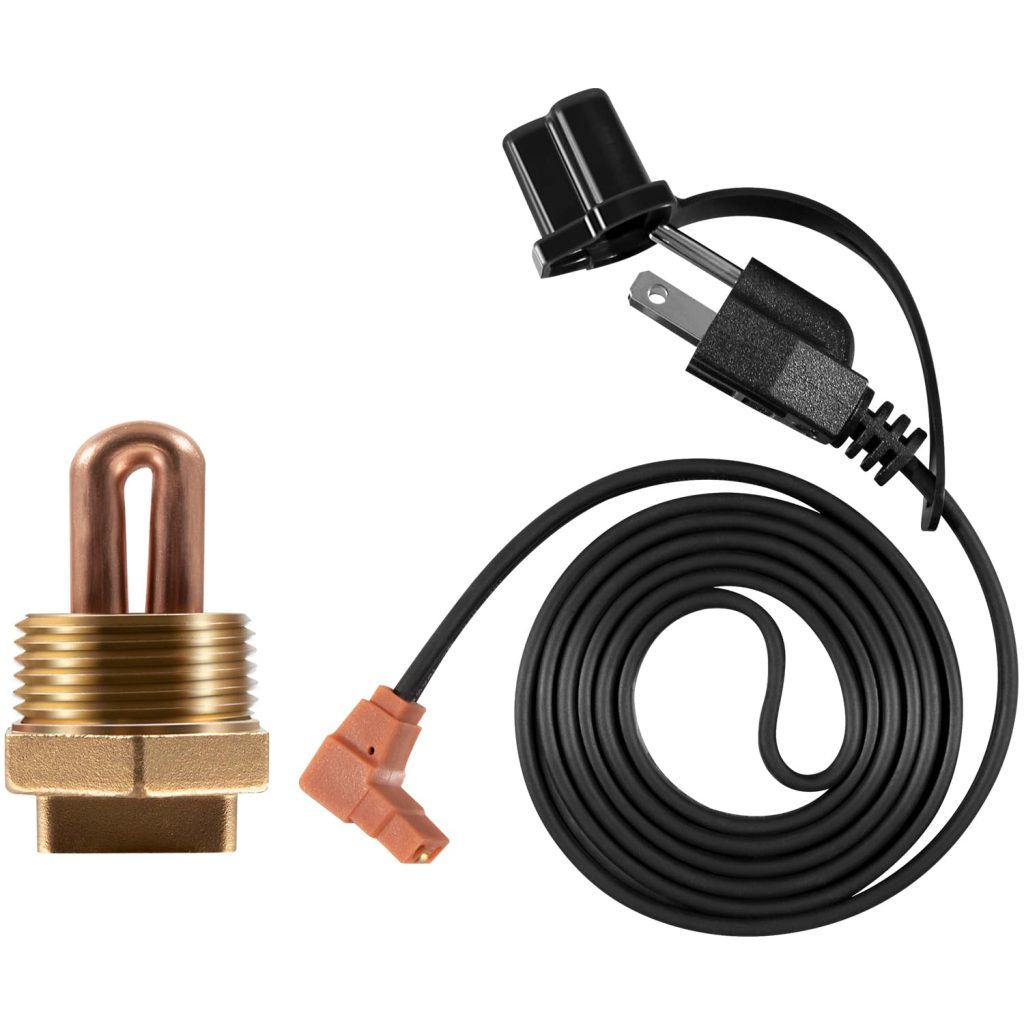
The copper heating element is a standout feature. Copper provides superior heat conductivity compared to other materials, ensuring rapid and efficient heat transfer to the surrounding coolant. Copper also resists corrosion better than steel elements, contributing to the heater’s long-term durability.
Construction and Durability
The 1″ NPT brass thread adapter demonstrates thoughtful engineering. Brass is inherently corrosion-resistant, crucial for a component that will be permanently installed in your engine block and exposed to coolant, moisture, and temperature extremes. The brass construction ensures the heater won’t seize in place over time, making future removal possible if ever necessary.
The standard 1″ NPT threading is a common size used in many engine blocks, which contributes to the heater’s broad compatibility across multiple vehicle brands and models. This standardization also means you’re working with proven, reliable thread specifications rather than proprietary sizing that might create installation challenges.
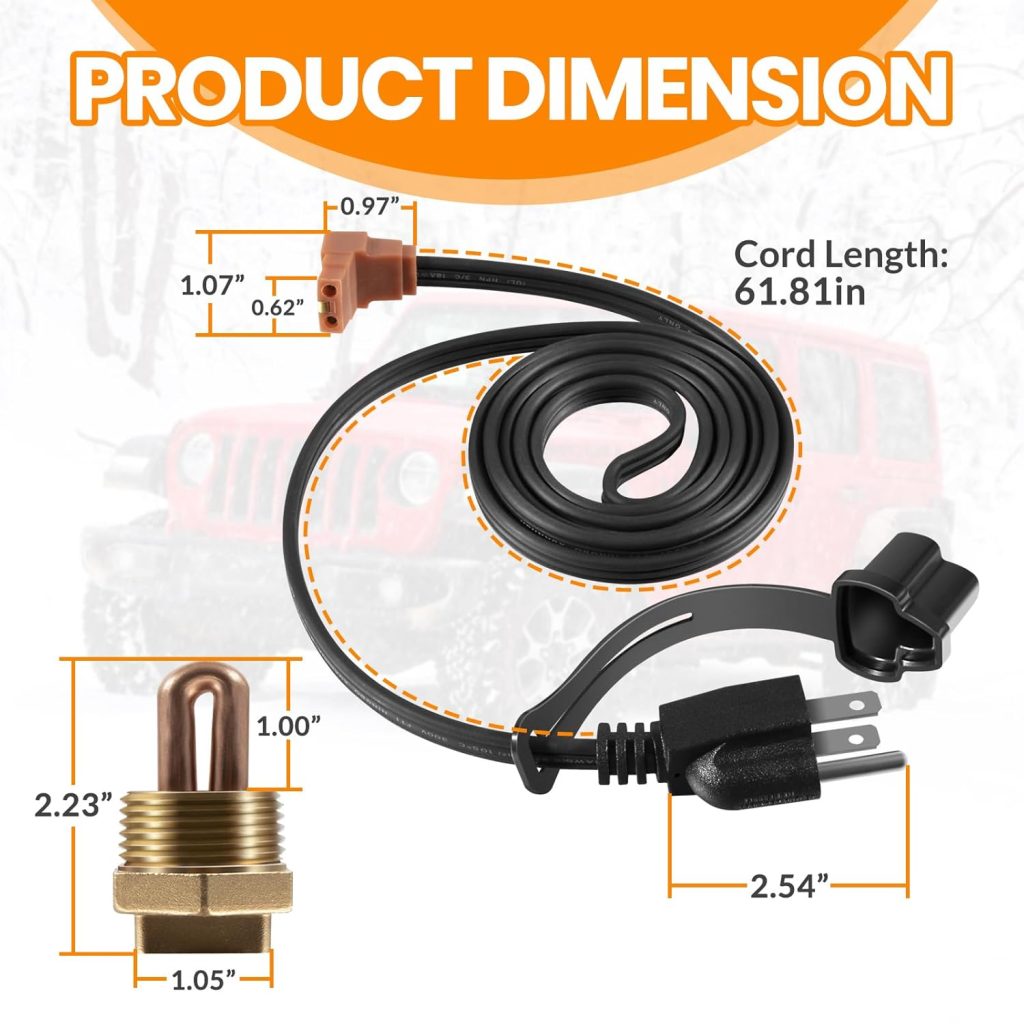
The included 5-foot (1.52-meter) cord provides adequate length for most parking situations, though some users may require an extension cord depending on their outlet location. The cord terminates in a standard 15-amp Type A plug, compatible with any regular household outlet.
Wide Compatibility: Which Vehicles Benefit Most?
One of this heater’s strongest selling points is its extensive compatibility across numerous vehicle brands and models. The manufacturer specifically lists compatibility with Eagle, Jaguar, Jeep, Renault, Kubota, Massey, Perkins, and Yanmar vehicles.
This diverse compatibility list reveals the heater’s versatility. It works effectively with everything from passenger vehicles (Jeep, Jaguar) to agricultural equipment (Kubota, Massey) and industrial engines (Perkins, Yanmar). This makes it an excellent choice for households with multiple vehicles or for commercial operations needing a standardized heating solution across a varied fleet.
Important Compatibility Considerations
Before purchasing, verify that your specific engine block has a 1″ NPT port available. Most engines have freeze plug locations that accept this threading, but checking your service manual or consulting with a mechanic ensures compatibility. Some modern engines may use different sizes or configurations, so confirmation is essential.
The 400-watt power output is best suited for gasoline engines up to approximately 2.5-3.0 liters in displacement, or smaller diesel engines. Larger engines, particularly diesel engines over 4.0 liters, may benefit from higher-wattage heaters for optimal performance in extreme cold. However, for most passenger vehicles and light trucks, this wattage is perfectly adequate.
Installation Process: Easier Than You Might Think
One of the most appealing aspects of this engine block heater is its straightforward installation process. Unlike some automotive accessories that require professional installation and specialized tools, this heater can typically be installed by mechanically-inclined DIYers with basic tools.
Step-by-Step Installation Overview
The installation process involves locating an appropriate 1″ NPT port in your engine block (often a freeze plug location), draining a portion of the coolant to prevent spillage, removing the existing plug, and threading the heater into place. The brass threads should be coated with appropriate thread sealant to ensure a leak-proof installation.
Most installations take 30-60 minutes for someone with basic mechanical skills. The heater simply screws into the block—no welding, no complex wiring, no permanent modifications to your vehicle. This simplicity is a significant advantage over more complex heating systems.
Professional Installation Option
While DIY installation is certainly possible, those uncomfortable working with engine coolant systems may prefer professional installation. Most mechanics can complete this installation in under an hour, with labor costs typically ranging from $75-$150 depending on your location and the accessibility of the installation point on your specific engine.
Professional installation provides peace of mind that the heater is correctly positioned, properly sealed, and that coolant levels are appropriately restored after installation. For those not experienced with automotive cooling systems, this investment in professional installation is worthwhile.
Performance Analysis: How Well Does It Actually Work?
The true test of any engine block heater is its real-world performance in cold conditions. Based on the technical specifications and user experiences, this heater delivers solid performance within its design parameters.
Heating Efficiency and Time Requirements
With 400 watts of heating power, this immersion heater typically requires 2-4 hours to bring an engine from ambient temperature to an optimal starting temperature. In moderately cold conditions (0°F to 32°F or -18°C to 0°C), three hours of operation is generally sufficient. In more severe cold (below 0°F or -18°C), allowing four hours provides better results.
The copper heating element’s superior conductivity means heat transfers efficiently to the surrounding coolant. As the coolant warms, natural convection circulates it throughout the engine block, gradually warming the entire engine assembly. This natural circulation is one advantage of immersion-style heaters over external alternatives.
Cold-Start Improvement
Users consistently report dramatically improved cold-weather starting when using this heater as recommended. Engines turn over more quickly, with less strain on the starter motor and battery. The immediate difference is noticeable—instead of the labored, reluctant cranking of a frozen engine, you get the quick, smooth start of a moderately warm engine.
Beyond easier starting, the benefits extend to reduced engine wear. By warming the oil and reducing thermal shock to engine components, this heater helps protect your engine from the damaging effects of cold starts, which account for the majority of engine wear over a vehicle’s lifetime.
Fuel Economy and Emissions Benefits
Pre-warming your engine with this heater improves fuel economy during the critical first few miles of cold-weather driving. A warm engine reaches optimal operating temperature faster, reducing the extended rich-fuel-mixture period that cold engines require. Users report fuel economy improvements of 10-15% for short trips in cold weather.
Additionally, warmer engines produce significantly fewer emissions during startup and the initial warm-up period. This environmental benefit, combined with the engine protection, makes the modest electricity cost worthwhile.
Practical Usage: Daily Operation and Best Practices
Getting the most from this engine block heater requires understanding how to use it effectively and efficiently.
Optimal Timing Strategy
The most efficient approach is using a timer to automatically activate the heater 3-4 hours before you need to start your vehicle. Simple outdoor-rated timers cost $15-$30 and pay for themselves quickly through reduced electricity consumption compared to leaving the heater plugged in all night.
For those with unpredictable schedules, Wi-Fi-enabled smart plugs allow smartphone control, letting you activate the heater remotely when you know you’ll be driving soon. This flexibility ensures your engine is warm when needed without wasting electricity during unexpected schedule changes.
Safety Considerations
Always use a properly grounded outlet and ensure any extension cord is rated for outdoor use and cold temperatures. The cord should be heavy-duty (14-gauge minimum) and rated for at least 15 amps to safely handle the heater’s power draw.
Keep the cord away from moving vehicle parts, particularly fan belts and pulleys. Route it carefully to prevent damage from closing hoods or doors. Many users secure the cord to prevent accidental disconnection or damage.
Never drive away with the heater still plugged in. Making unplugging part of your pre-drive routine prevents potentially damaging the cord, outlet, or vehicle. Some users install breakaway cords that disconnect safely if accidentally driven away while connected.
Value Assessment: Is It Worth the Investment?
Evaluating any automotive accessory requires considering both the initial cost and the long-term value it provides.
Cost-Benefit Analysis
Engine block immersion heaters in this category typically retail for $30-$60, making them an affordable investment in engine protection. When you consider that a single major engine repair can cost thousands of dollars, the heater pays for itself many times over by preventing cold-start damage.
The modest electricity consumption (approximately $0.20-$0.30 per use) is negligible compared to the value of extended engine life, improved fuel efficiency, and reliable cold-weather starting. Over a single winter season, you might spend $25-$40 in electricity for daily use—a small price for the protection provided.
Longevity and Reliability
The copper heating element and brass construction suggest this heater should provide many years of reliable service. Unlike cheaper heaters with steel components prone to corrosion, the quality materials used here resist the harsh environment inside an engine block.
Most users report trouble-free operation for multiple winters without degradation in performance. The simple design has few failure points, contributing to its reliability.
Potential Drawbacks and Limitations
No product is perfect, and honest assessment requires acknowledging potential limitations.
Wattage Limitations for Larger Engines
The 400-watt rating, while adequate for most applications, may prove insufficient for very large engines or extreme cold conditions below -30°F (-34°C). Diesel engines over 4.0 liters or large V8 gasoline engines might benefit from higher-wattage alternatives.
Installation Requirements
While installation is straightforward, it does require draining coolant and working with engine block components. Those uncomfortable with this level of mechanical work will incur professional installation costs. Additionally, not all engines have conveniently located 1″ NPT ports, potentially complicating installation on some vehicles.
Cord Length Considerations
The 5-foot cord, while adequate for many situations, may require an extension cord depending on your parking arrangement and outlet location. This adds a minor additional expense and creates another potential failure point.
No Built-In Thermostat
Unlike some premium heaters, this model doesn’t include a built-in thermostat to cycle on and off once optimal temperature is reached. This means it continues heating as long as it’s plugged in, making a timer even more important for preventing unnecessary electricity consumption.
Customer Satisfaction and Support
The manufacturer’s commitment to customer satisfaction is evident in their 100% satisfaction guarantee and return policy. This guarantee provides confidence that you’re protected if the product doesn’t meet your expectations or proves incompatible with your specific application.
Responsive customer support can make a significant difference when questions or issues arise. The availability of returns if you’re unsatisfied demonstrates the manufacturer’s confidence in their product quality.
Final Verdict: Should You Buy This Engine Block Heater?
After comprehensive analysis, the Engine Block Immersion Heater (Model 3100003/310-0003) earns a strong recommendation for most cold-weather vehicle owners. Its combination of effective heating performance, quality construction, broad compatibility, and reasonable price point makes it an excellent value.
Who Should Buy This Heater
This heater is ideal for:
- Owners of small to medium-sized gasoline engines in cold climates
- Those seeking affordable, reliable engine protection
- DIY-friendly individuals comfortable with basic automotive work
- Fleet operators needing standardized heating solutions for compatible vehicles
- Anyone experiencing difficult cold-weather starting
Who Might Consider Alternatives
You might want to explore other options if:
- You have a large diesel engine over 4.0 liters
- You live in extreme cold regions regularly experiencing temperatures below -30°F
- You prefer completely plug-and-play solutions without any installation required
- Your engine doesn’t have a compatible 1″ NPT port
The Bottom Line
For the typical cold-weather driver with a compatible vehicle, this engine block heater represents one of the best investments you can make in engine longevity and winter reliability. The modest cost, both initial and operational, is trivial compared to the benefits of reduced engine wear, improved starting, better fuel economy, and the peace of mind that comes with knowing your vehicle will start reliably regardless of temperature.
The quality construction suggests years of dependable service, while the straightforward installation makes it accessible even for those with limited mechanical experience. Combined with the manufacturer’s satisfaction guarantee, this heater offers minimal risk and substantial potential benefit.
In the world of engine block heaters, the 3100003/310-0003 delivers exactly what cold-weather drivers need: reliable, efficient warming at a reasonable price. It may not have all the bells and whistles of premium alternatives, but it does the job that matters—protecting your engine and ensuring reliable starts when temperatures drop. For most users, that’s exactly what they need, making this heater a smart, practical choice for cold-weather engine protection.