

When it’s time to replace your vehicle’s tires, you might notice different letter ratings stamped on the sidewall and wonder what they mean. One common question drivers ask is whether they can use H-rated tires instead of V-rated tires to save money or because their preferred tire model isn’t available in a V rating. The answer isn’t a simple yes or no, and making the wrong choice could affect your vehicle’s performance, safety, and even your insurance coverage.
In this comprehensive guide, we’ll explain everything you need to know about tire speed ratings, the specific differences between H and V ratings, when it’s safe to downgrade, and the potential consequences of using lower-rated tires than your vehicle manufacturer recommends. Whether you’re looking to save money or simply understand your options, this article will help you make an informed decision about your tire replacement.
Understanding Tire Speed Ratings: What Those Letters Actually Mean
Tire speed ratings are standardized codes that indicate the maximum speed a tire can safely sustain under its recommended load capacity. These ratings were developed through controlled testing and represent the tire’s performance capabilities under ideal conditions.
The speed rating appears as a letter on your tire’s sidewall, typically found at the end of the tire size code. For example, in a tire marked as 225/45R17 94V, the “V” is the speed rating. This letter system was established by European tire manufacturers and has become the global standard for passenger vehicles.
Each letter corresponds to a specific maximum speed, tested and certified under controlled laboratory conditions. The tire is run at progressively higher speeds for specific durations until it reaches its rated maximum speed, which it must sustain for ten minutes without failure. This rigorous testing ensures consistency and reliability across manufacturers and tire models.
Understanding these ratings helps you select tires appropriate for your vehicle’s performance capabilities and your driving habits. Using tires with inadequate speed ratings can compromise safety, while knowing the differences allows you to make cost-effective decisions when appropriate.
H Rating Versus V Rating: The Specific Differences
The fundamental difference between H-rated and V-rated tires is their maximum safe operating speed, but the implications extend beyond just top speed capability.
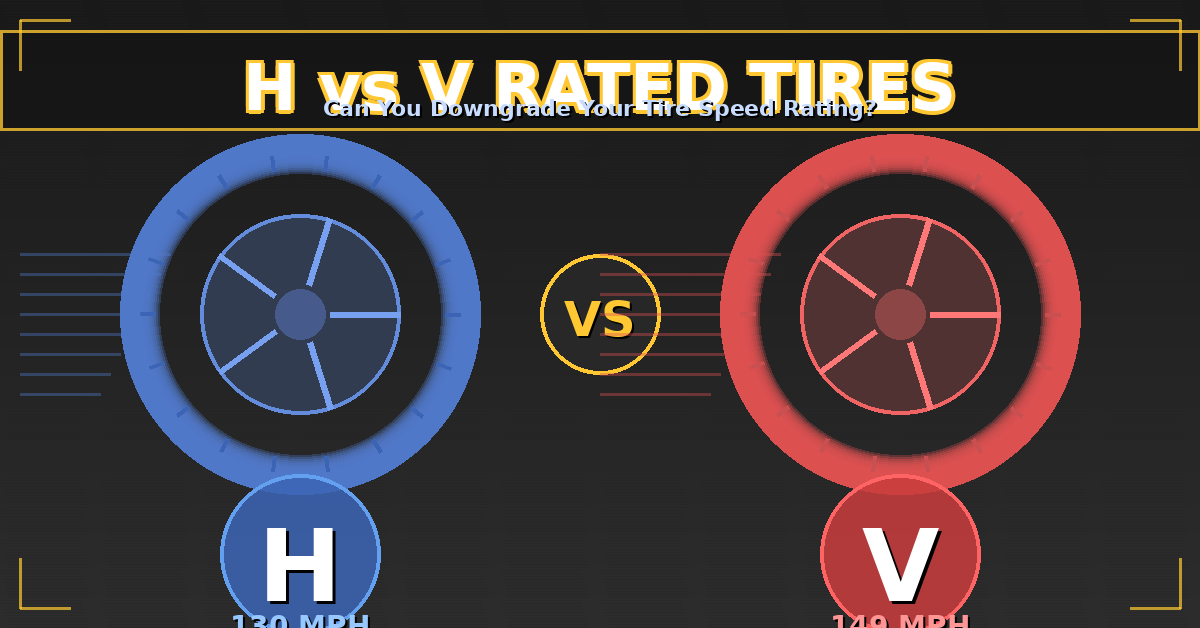
H-Rated Tires: Maximum Speed 130 MPH (210 km/h)
H-rated tires are designed to safely handle speeds up to 130 miles per hour. This rating is common on family sedans, crossovers, minivans, and many standard passenger vehicles. For the vast majority of everyday driving situations, H-rated tires provide more than adequate speed capability, as legal speed limits in most countries fall well below this threshold.
These tires typically feature construction designed for comfort, longevity, and all-around performance rather than extreme high-speed capability. The rubber compounds and internal structure prioritize durability and ride quality over maximum performance at sustained high speeds.
V-Rated Tires: Maximum Speed 149 MPH (240 km/h)
V-rated tires can safely sustain speeds up to 149 miles per hour, representing a significant 19 mph increase over H-rated alternatives. This higher rating is commonly specified on sportier vehicles, performance sedans, and cars with more powerful engines designed for spirited driving.
The construction of V-rated tires incorporates stronger internal components, different rubber compounds, and enhanced heat dissipation capabilities. These engineering differences allow the tire to maintain structural integrity and performance at higher speeds for extended periods.
Beyond Just Speed: Construction and Performance Differences
The speed rating difference reflects fundamental variations in tire construction. V-rated tires generally feature stiffer sidewalls, which improve handling response and cornering stability. The tread compounds are often formulated for better grip at higher speeds, and the internal belts and casing are reinforced to handle increased centrifugal forces.
These construction differences mean V-rated tires typically offer sharper steering response, better high-speed stability, and improved performance during aggressive driving, even at speeds well below their maximum rating. However, they may also deliver a slightly firmer ride and sometimes shorter tread life compared to H-rated alternatives.
When You Can Use H-Rated Tires Instead of V-Rated: Safe Scenarios
There are specific situations where downgrading from V to H-rated tires is acceptable and won’t compromise safety or vehicle performance.
Your Vehicle Manufacturer Allows Multiple Ratings
Some vehicles come from the factory with different tire speed ratings depending on the trim level, optional packages, or market region. If your owner’s manual or the tire information placard lists both H and V as acceptable ratings, you have manufacturer approval to use either rating. This is common on vehicles that span both standard and sport variants.
Always consult your owner’s manual or the tire information sticker located on the driver’s door jamb. If multiple ratings are listed as acceptable, you can safely choose the lower rating without concern.
You Never Approach High Speeds
If your driving habits keep you well below highway speeds and you never drive aggressively, the practical difference between H and V ratings becomes negligible. For drivers who primarily commute at moderate speeds, rarely exceed 70-75 mph, and don’t engage in spirited driving, H-rated tires provide adequate performance capability.
This scenario is particularly relevant for older vehicles that originally came with V-rated tires but are now used exclusively for city driving or short commutes. The theoretical speed capability becomes largely irrelevant when you never approach speeds where the difference matters.
Winter or Specialty Tire Applications
Winter tires often carry lower speed ratings than all-season or summer tires, and this is generally acceptable. Many quality winter tires are rated H or even lower (T-rated for 118 mph) because extreme cold-weather performance takes priority over maximum speed capability.
If you’re installing dedicated winter tires for seasonal use and you drive cautiously in winter conditions, using H-rated winter tires on a vehicle that normally requires V-rated tires is typically acceptable. However, you should adjust your driving to account for both the winter conditions and the reduced speed rating.
Track Day or Racing Applications
Ironically, some dedicated track tires designed for racing have lower speed ratings despite superior performance capabilities. This occurs because these tires prioritize extreme grip and track performance over sustained highway speeds. If you’re selecting tires specifically for track use and understand the application, speed ratings become less relevant than the tire’s actual performance characteristics.
When You Should NOT Use H-Rated Tires: Critical Safety Considerations
Despite potential cost savings, certain situations make using H-rated tires instead of V-rated tires inadvisable or outright dangerous.
Your Vehicle’s Performance Capabilities
If you drive a high-performance vehicle, sports car, or any vehicle specifically engineered for spirited driving, downgrading tire speed ratings compromises the safety systems and performance the manufacturer designed into the vehicle. Engineers select specific tire ratings based on the vehicle’s power, weight, suspension tuning, and intended use.
Performance vehicles often have sophisticated electronic stability systems calibrated for specific tire performance characteristics. Using lower-rated tires can interfere with these systems’ effectiveness and potentially create dangerous handling situations during emergency maneuvers.
Vehicles With High Top Speeds
If your vehicle is capable of speeds exceeding 130 mph, whether through engine power or performance modifications, using H-rated tires creates a genuine safety hazard. Even if you personally never intend to drive that fast, emergency situations, downhill grades, or other drivers using your vehicle could result in speeds approaching or exceeding the tire’s safe operating limit.
The consequences of exceeding a tire’s speed rating include overheating, structural failure, and potentially catastrophic blowouts. At high speeds, tire failure can be deadly, making this an unacceptable risk.
Insurance and Warranty Implications
Installing tires with lower speed ratings than manufacturer specifications can void your vehicle warranty and may affect insurance coverage in the event of an accident. If an accident occurs and investigators determine your tires didn’t meet manufacturer specifications, your insurance company might deny claims or reduce coverage.
Additionally, tire manufacturers warranty their products only when used as intended. Using a tire beyond its rated capabilities voids any warranty coverage, leaving you without recourse if the tire fails prematurely.
Legal and Regulatory Requirements
Some jurisdictions have legal requirements that tires meet or exceed manufacturer specifications. In certain European countries, for example, using lower-rated tires than specified can result in fines, failed vehicle inspections, or legal liability in accidents.
Even where not explicitly illegal, using inadequate tires could result in liability if an accident occurs. Courts may find you negligent for knowingly installing inferior tires, potentially affecting legal outcomes in accident litigation.
The Real-World Performance Impact of Downgrading
Beyond just maximum speed, the practical differences between H and V-rated tires affect everyday driving experience in subtle but measurable ways.
Handling and Cornering Characteristics
V-rated tires typically provide crisper steering response and more precise handling, even at moderate speeds. The stiffer construction and performance-oriented compounds translate to better road feel and more predictable behavior during aggressive cornering or emergency maneuvers.
Downgrading to H-rated tires often results in slightly vaguer steering, more body roll in corners, and less confident handling at the limits of traction. For most drivers in normal conditions, these differences are subtle, but enthusiast drivers will likely notice reduced performance.
Braking Performance Considerations
While speed rating doesn’t directly measure braking performance, the rubber compounds and construction differences between H and V-rated tires can affect braking distances. Performance-oriented V-rated tires often use stickier compounds that provide better grip during hard braking.
The difference might only be a few feet in emergency braking from highway speeds, but those feet could mean the difference between avoiding an accident and a collision. This consideration becomes particularly important for heavier vehicles or those frequently carrying passengers.
Heat Buildup and Sustained Highway Driving
Even at legal highway speeds, tires generate significant heat through flexing and friction. V-rated tires are engineered to dissipate heat more effectively, making them better suited for sustained high-speed highway driving, even when traveling well below their maximum rating.
Long highway trips at 75-80 mph in hot weather can cause excessive heat buildup in H-rated tires that weren’t designed for extended high-speed operation. This can accelerate tread wear, reduce fuel efficiency slightly, and in extreme cases, increase the risk of tire failure.
Ride Comfort Trade-offs
One potential advantage of H-rated tires is improved ride comfort. The less aggressive construction often results in more compliant sidewalls that better absorb road imperfections, creating a smoother, quieter ride.
If your vehicle came with harsh-riding V-rated performance tires and you prioritize comfort over maximum performance, downgrading to quality H-rated touring tires might improve your driving experience, assuming your vehicle allows this change and you understand the performance trade-offs.
Cost Considerations: Is the Savings Worth It?
The price difference between H and V-rated tires varies considerably based on brand, model, and size, making financial considerations complex.
Typical Price Differences
In many cases, the price difference between comparable H and V-rated tires ranges from ten to thirty dollars per tire, though this varies widely. For a complete set of four tires, you might save forty to one hundred twenty dollars by choosing H-rated alternatives.
However, this savings must be weighed against potential consequences. If downgrading creates any safety risk, no amount of savings justifies the compromise. Additionally, cheaper tires that happen to be H-rated may cost less primarily because they’re lower quality overall, not just because of the speed rating difference.
Long-Term Value Considerations
Sometimes V-rated tires, despite higher initial cost, offer better long-term value. Many performance-oriented tires feature more advanced tread compounds and construction that provide longer tread life, better fuel efficiency, and superior wet-weather performance.
A slightly more expensive V-rated tire that lasts 70,000 miles delivers better value than a cheaper H-rated tire that only lasts 50,000 miles. When evaluating cost, consider the total ownership expense, not just the purchase price.
The False Economy of Cheap Tires
Choosing tires based solely on price often proves penny-wise and pound-foolish. The cheapest H-rated tire might save money upfront but could cost more through poor fuel economy, shorter lifespan, inadequate wet traction, or increased risk of road hazard damage.
Quality tires from reputable manufacturers, whether H or V-rated, represent an investment in safety and vehicle performance. The speed rating is just one specification among many that determine a tire’s quality and suitability for your vehicle.
How to Make the Right Decision for Your Vehicle
Determining whether you can safely use H-rated tires instead of V-rated requires careful consideration of multiple factors specific to your situation.
Check Manufacturer Specifications First
Your first step should always be consulting your vehicle’s owner’s manual and the tire information placard on the driver’s door jamb. These sources provide the manufacturer’s official tire specifications, including acceptable speed ratings.
If the manufacturer lists only V-rated tires without alternatives, this is a strong indication that downgrading isn’t recommended. The engineers who designed your vehicle selected that rating for specific reasons related to the vehicle’s performance and safety characteristics.
Honestly Assess Your Driving Habits
Consider how you actually use your vehicle. Do you frequently drive on highways at higher speeds? Do you enjoy spirited driving on winding roads? Do you occasionally need to make emergency maneuvers in traffic?
If your honest assessment reveals that you drive conservatively, rarely exceed moderate highway speeds, and prioritize comfort over performance, the practical difference between H and V ratings becomes less significant, assuming your vehicle allows the substitution.
Consider Your Vehicle’s Age and Value
For older vehicles with diminished performance capabilities or reduced value, using H-rated tires might make more economic sense than for newer, high-value vehicles. A fifteen-year-old sedan with 150,000 miles presents different considerations than a three-year-old performance vehicle still under warranty.
However, age doesn’t eliminate safety concerns. Even an older vehicle deserves safe, appropriate tires that won’t fail unexpectedly or compromise your safety in emergency situations.
Consult with Tire Professionals
Reputable tire dealers and automotive professionals can provide valuable guidance based on your specific vehicle and needs. They understand the nuances of tire specifications and can recommend appropriate alternatives that balance performance, safety, and budget.
Be wary of shops that prioritize selling you the most expensive tires without considering your actual needs, but also be skeptical of those who dismiss manufacturer specifications to make a quick sale on cheaper inventory.
Alternative Solutions: Getting the Performance You Need at a Better Price
If budget concerns drive your interest in H-rated tires, consider these alternatives that don’t compromise on speed rating.
Look for Sales and Rebates
Tire prices fluctuate significantly throughout the year, with major sales around holidays and seasonal transitions. Manufacturers frequently offer rebates on premium tires, sometimes making V-rated options competitively priced with H-rated alternatives.
Sign up for email notifications from tire retailers and watch for promotional periods. The money saved during a sale often exceeds the difference between H and V-rated tires, allowing you to maintain proper specifications while still saving money.
Consider Previous-Generation Models
When manufacturers introduce new tire models, previous generations often see significant price reductions despite remaining excellent tires. A last-year V-rated model might cost less than current H-rated options while offering superior performance.
These tires are still new, fully warrantied, and perfectly safe. You’re simply avoiding the premium for the latest technology, which often provides marginal improvements for most drivers.
Buy Three Tires, Get One Free Promotions
Many retailers run promotions offering one free tire with the purchase of three. These deals effectively reduce your per-tire cost by twenty-five percent, potentially making premium V-rated tires affordable within your budget.
Calculate the effective per-tire cost during these promotions. You might discover that V-rated tires during a buy-three-get-one-free sale cost less than H-rated tires at regular price.
Explore Different Brands
Major tire brands command premium prices, but lesser-known manufacturers often produce quality tires meeting the same standards at lower prices. Brands like Kumho, Hankook, Nexen, and Falken offer V-rated tires that frequently cost less than H-rated options from premium brands.
Research customer reviews and professional tire tests to identify quality budget brands. You can often find V-rated tires that meet your speed requirements while staying within budget by being flexible about brand.
The Bottom Line: Safety Should Always Come First
The decision to use H-rated tires instead of V-rated ultimately comes down to balancing cost considerations against safety, performance, and manufacturer recommendations.
If your vehicle manufacturer explicitly allows both ratings, you drive conservatively, and you understand the performance trade-offs, using H-rated tires can be acceptable and safe. Many drivers successfully use lower-rated tires without incident when the application is appropriate.
However, if your vehicle specifies only V-rated tires, you frequently drive at higher speeds, you value performance handling, or you have any doubts about the appropriateness of downgrading, maintain the manufacturer’s specified rating. The modest cost savings aren’t worth compromising your safety or your vehicle’s performance capabilities.
Remember that tires are your vehicle’s only contact with the road. They affect acceleration, braking, handling, and overall safety more than almost any other component. Investing in appropriate, quality tires is one of the most important maintenance decisions you make as a vehicle owner.
When in doubt, consult your vehicle’s documentation and seek advice from qualified tire professionals who can assess your specific situation. The right answer varies based on your vehicle, driving habits, and individual circumstances, but it should always prioritize safety above savings.
Make an informed decision based on facts, manufacturer specifications, and honest assessment of your needs. Your tires support everything your vehicle does, making them worthy of careful consideration and appropriate investment.