

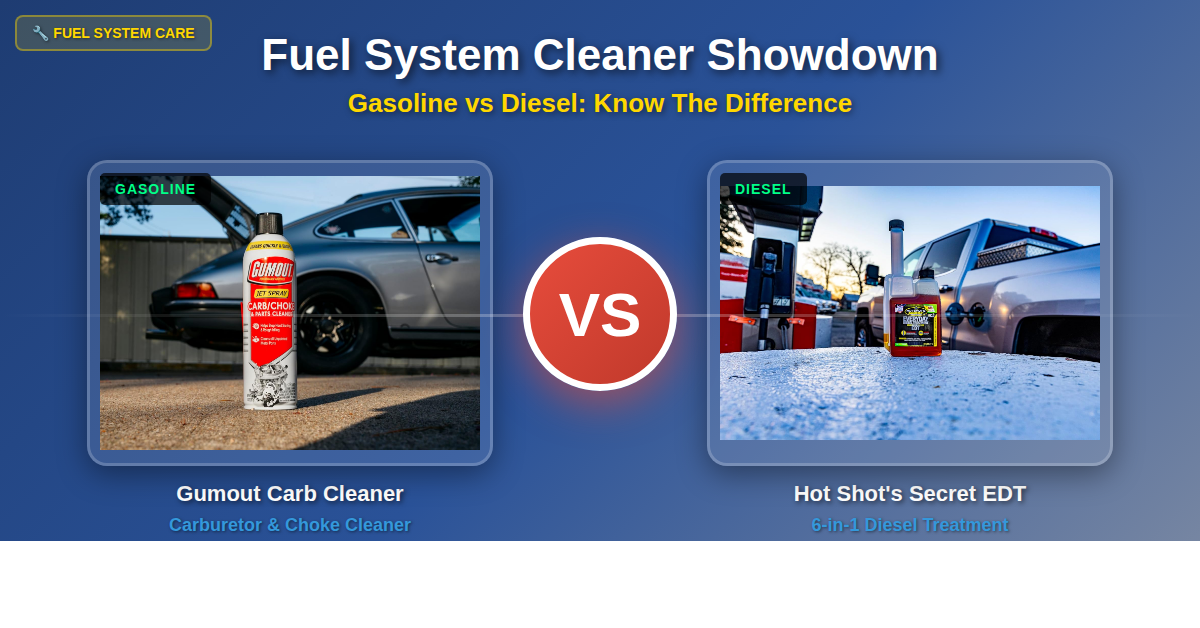
When it comes to maintaining your vehicle’s fuel system, using the right cleaner is not just important—it is essential. One of the most common and potentially costly mistakes vehicle owners make is using a gasoline fuel system cleaner in a diesel engine, or vice versa. These products may look similar on the shelf, but they are formulated with fundamentally different chemistries to address the unique challenges of gasoline and diesel fuel systems.
Understanding the differences between gasoline and diesel fuel system cleaners can save you from engine damage, improve performance, extend engine life, and help you make informed purchasing decisions. This comprehensive guide will explore the chemistry, functionality, application methods, and specific products in each category, using real examples like Gumout Carb and Choke Cleaner for gasoline systems and Hot Shot’s Secret Everyday Diesel Treatment for diesel systems.
Whether you drive a gas-powered sedan, a diesel pickup truck, or maintain small engines and equipment, this guide will help you choose the right fuel system cleaner for your specific needs and understand why using the correct product matters so much.
Understanding Engine Type Fundamentals
Before diving into fuel system cleaners, it is crucial to understand the fundamental differences between gasoline and diesel engines, as these differences dictate why specialized cleaners are necessary.
Gasoline Engine Basics
Gasoline engines use spark ignition, meaning a spark plug ignites a precisely timed air-fuel mixture in the combustion chamber. Modern gasoline engines use fuel injection systems, but many older vehicles, small engines, lawn equipment, motorcycles, and classic cars still use carburetors—mechanical devices that mix air and fuel in the proper ratio.
Gasoline has a lower viscosity than diesel fuel and evaporates more readily. The fuel system components in gasoline engines include fuel injectors or carburetors, fuel pumps, fuel lines, intake valves, and combustion chambers. These components face specific challenges including carbon buildup, varnish deposits, and gum formation from gasoline oxidation.
Diesel Engine Basics
Diesel engines use compression ignition, where the fuel ignites from the heat of compressed air rather than from a spark. Diesel fuel is injected directly into the combustion chamber at extremely high pressures—modern common rail diesel systems operate at pressures exceeding 30,000 PSI.
Diesel fuel is oilier and more lubricating than gasoline, with higher energy density. Diesel fuel systems include high-pressure fuel pumps, precision fuel injectors with microscopic tolerances, fuel filters, and glow plugs for cold starting. These systems face different challenges including injector coking, fuel system wear from inadequate lubrication, water contamination, and biological growth in fuel tanks.
Why Specialized Cleaners Matter
The chemical composition of gasoline and diesel fuel differs significantly, meaning the deposits they create are chemically different. The operating temperatures, pressures, and combustion characteristics also differ dramatically between engine types. Using the wrong cleaner can damage sensitive components, void warranties, cause performance problems, or simply be ineffective at removing the specific deposits present in that fuel system.
Gasoline Fuel System Cleaners: Chemistry and Function
Gasoline fuel system cleaners are formulated to address the specific deposit types and system characteristics of gasoline engines.
What They Clean
Gasoline fuel system cleaners target several specific deposit types. Carbon deposits form on intake valves, combustion chambers, and piston tops from incomplete combustion and oil vapor contamination. Varnish is a sticky, lacquer-like substance that forms when gasoline oxidizes and ages, particularly in fuel that sits unused for extended periods. Gum deposits are polymerized fuel components that can clog tiny passages in carburetors and fuel injectors.
In older engines with carburetors, deposits accumulate in the carburetor jets, passages, float bowls, and choke valves. These deposits restrict fuel and air flow, disrupting the precise air-fuel mixture needed for proper combustion. Modern port fuel injection systems experience deposit buildup on injector tips and intake valves, while direct injection gasoline engines develop deposits on injector nozzles and combustion chamber surfaces.
Active Ingredients and Formulation
Gasoline fuel system cleaners typically contain powerful solvents designed to dissolve organic deposits. Common active ingredients include polyether amines (PEA), which are highly effective detergents that clean injectors and valves; polyisobutylene amines (PIBA), which prevent deposit formation; and various petroleum distillates and alcohols that act as carriers and solvents.
Products like Gumout Carb and Choke Cleaner use aggressive solvent formulations designed for external application directly onto carburetor components. These spray cleaners work quickly without requiring disassembly, dissolving deposits on contact. The quick-drying formulation ensures residue does not remain after cleaning, and the chemistry is safe for unpainted metal surfaces but aggressive enough to remove stubborn carbon and varnish.
Types of Gasoline Fuel System Cleaners
Several categories of gasoline fuel system cleaners serve different purposes:
Carburetor Cleaners: These are aggressive spray cleaners like Gumout Carb and Choke Cleaner designed for external application on carburetor components. They work without disassembly, evaporate quickly, and are ideal for routine maintenance on older vehicles and small engines.
Fuel Injector Cleaners: These are liquid additives poured into the fuel tank that clean injectors, intake valves, and combustion chambers as the fuel passes through the system. They provide ongoing cleaning with every tank of fuel.
Complete Fuel System Cleaners: These comprehensive treatments clean the entire fuel system from tank to combustion chamber, addressing deposits throughout the fuel delivery pathway.
Intake Valve Cleaners: Specifically formulated for direct injection gasoline engines where fuel does not wash over intake valves, these cleaners address the valve deposit problem unique to DI engines.
How Gasoline Cleaners Work
Spray carburetor cleaners like Gumout work through direct application. You spray the cleaner onto carburetor components while the engine is running or turned off, and the powerful solvents immediately begin dissolving deposits. The cleaner penetrates into small passages and jets, breaking down gum and varnish. As the solvent evaporates, it carries away dissolved deposits, leaving clean metal surfaces.
Fuel additive cleaners work differently. You pour them into your gas tank, and they mix with the fuel. As fuel flows through injectors or carburetor jets, the cleaning agents dissolve deposits. The detergents in the formula prevent new deposits from forming, providing ongoing protection with continued use.
Diesel Fuel System Cleaners: Chemistry and Function
Diesel fuel system cleaners address the fundamentally different challenges of diesel fuel systems and diesel fuel chemistry.
What They Clean and Protect
Diesel fuel system cleaners target different issues than gasoline cleaners. Internal injector deposits form from fuel coking at high temperatures inside precision injector nozzles. External injector deposits accumulate on injector tips from combustion byproducts. These deposits can disrupt fuel spray patterns, reducing combustion efficiency.
Diesel systems also face lubricity issues. Modern ultra-low sulfur diesel (ULSD) fuel has reduced lubrication properties compared to older diesel formulations. This can cause premature wear on high-pressure fuel pumps and injectors. Water contamination is another concern, as diesel fuel readily absorbs moisture, leading to corrosion, biological growth, and fuel system damage.
Fuel stability becomes critical for diesel owners, as diesel fuel can oxidize and degrade during storage, forming sludge and particulates. Cold weather operation presents challenges, as diesel fuel can gel and become unpumpable in freezing temperatures.
Active Ingredients and Formulation
Diesel fuel additives contain a complex blend of chemicals addressing multiple issues simultaneously. Detergents and dispersants keep injectors clean by preventing deposit formation and dispersing existing deposits. Lubricity improvers add back the lubrication properties removed during the ULSD refining process, protecting fuel pumps and injectors from wear.
Cetane improvers boost the cetane number of diesel fuel, improving combustion quality, reducing ignition delay, and promoting smoother running and easier cold starts. Products like Hot Shot’s Secret Everyday Diesel Treatment can boost cetane by up to 7 points, significantly improving engine performance.
Corrosion inhibitors protect metal fuel system components from rust and corrosion caused by water and acidic combustion byproducts. Demulsifiers help separate water from fuel so it can be removed by fuel filters rather than being carried into the combustion system. Stabilizers prevent fuel oxidation during storage, while cold flow improvers prevent wax crystal formation in cold weather.
Multi-Function Approach
Unlike gasoline cleaners which often focus on a single function, diesel fuel additives typically provide multiple benefits in one product. Hot Shot’s Secret Everyday Diesel Treatment exemplifies this approach with its 6-in-1 formulation:
It cleans both internal and external injector deposits, enhances fuel lubricity to protect pumps and injectors, boosts cetane for better combustion and fuel economy, demulsifies moisture to prevent water-related damage, stabilizes fuel to prevent oxidation and degradation, and inhibits rust and corrosion throughout the fuel system.
This comprehensive approach reflects the reality that diesel fuel systems face multiple simultaneous challenges that cannot be addressed with a single-purpose cleaner.
How Diesel Cleaners Work
Diesel fuel additives are poured directly into the fuel tank before or during refueling. The additive mixes thoroughly with the diesel fuel as you drive. The cleaning agents circulate through the entire fuel system with every gallon of fuel, continuously cleaning injectors, protecting pumps, and addressing deposits.
The lubricity enhancers coat metal surfaces, reducing friction and wear. The cetane improvers modify the fuel’s combustion characteristics for more complete burning. The corrosion inhibitors form protective films on metal surfaces. The demulsifiers cause water to separate from fuel and settle to the bottom of the tank where it can be removed by water separator filters.
Regular use is recommended—products like Hot Shot’s Secret are designed for use at every fill-up, providing continuous protection and cleaning rather than occasional intensive treatment.
Key Differences Between Gasoline and Diesel Fuel System Cleaners
Now that we understand each type individually, let us examine the critical differences that make them non-interchangeable.
Application Method
Gasoline carburetor cleaners like Gumout are often spray cleaners for external application directly onto components. They work immediately without requiring the engine to run for extended periods. Gasoline fuel injector cleaners are poured into the fuel tank but typically require one or more tanks of fuel to complete their cleaning action.
Diesel fuel additives are exclusively in-tank treatments that work continuously as you drive. They require regular use at every fill-up for optimal results. There are no spray-on diesel injector cleaners for consumer use because diesel injectors are sealed, high-pressure systems that cannot be accessed or cleaned externally like carburetors.
Chemical Composition
Gasoline cleaners use aggressive, fast-acting solvents designed to dissolve carbon, varnish, and gum deposits specific to gasoline fuel. These solvents evaporate quickly and are optimized for the lower-temperature, lower-pressure environment of gasoline fuel systems.
Diesel additives use detergents, dispersants, and modifiers designed for high-pressure, high-temperature diesel systems. They include lubricity agents that would be unnecessary in gasoline systems. The chemistry is designed to work in oily diesel fuel rather than volatile gasoline.
Function and Purpose
Gasoline cleaners focus primarily on removing deposits and restoring performance. They address problems like hard starting, rough idle, stalling, and poor acceleration caused by clogged passages and disrupted air-fuel mixture.
Diesel additives provide comprehensive fuel system care including cleaning, lubrication, cetane enhancement, moisture control, corrosion prevention, and fuel stabilization. The emphasis is on preventive maintenance and performance optimization rather than just deposit removal.
Treatment Frequency
Gasoline carburetor cleaners are used as needed for maintenance or troubleshooting, often seasonally or when problems arise. Fuel injector cleaners might be used every few thousand miles or several times per year.
Diesel fuel additives are designed for use at every fill-up or at minimum every other fill-up. The continuous treatment approach provides ongoing protection and prevents problems rather than waiting for them to develop.
Compatibility and Safety
Gasoline cleaners are safe for unpainted metal, rubber, and plastic components in gasoline fuel systems but may damage diesel fuel system components. The aggressive solvents can attack seals and o-rings in diesel systems, and they do not provide the lubricity diesel fuel pumps require.
Diesel additives are formulated specifically for the materials used in diesel fuel systems. Using them in gasoline systems would be ineffective and wasteful, as they do not address gasoline deposit chemistry and contain additives irrelevant to gasoline engines.
Product Comparison: Gumout vs Hot Shot’s Secret
Let us compare specific products to illustrate these differences practically.
Gumout Carb and Choke Cleaner (800002231)
This 14-ounce spray can is designed for gasoline engines with carburetors. It quickly removes gum, varnish, and dirt from carburetor chambers, jets, and choke valves. The formula works on unpainted metal parts and dries quickly without leaving residue.
Gumout helps overcome hard starting, rough idling, stalling, and high exhaust emissions caused by carburetor deposits. It requires no disassembly, making it ideal for quick maintenance. You spray it directly onto carburetor components, let it work for a few moments, and the deposits dissolve.
This product is perfect for older vehicles with carburetors, lawn mowers, chainsaws, generators, motorcycles, ATVs, and other small engine equipment. It provides immediate results and is easy to use for anyone comfortable working around engines.
Hot Shot’s Secret Everyday Diesel Treatment (HSSEDT16ZS)
This 16-ounce bottle treats up to 400 gallons of diesel fuel, making it extremely economical. The 6-in-1 formula cleans injectors, boosts cetane by up to 7 points, enhances lubricity, prevents corrosion, demulsifies moisture, and stabilizes fuel.
You use 1 to 2 ounces per 25 gallons of diesel fuel at every fill-up. Simply pour it into your tank before or during refueling. The treatment continuously cleans and protects your entire diesel fuel system, improving fuel economy, reducing maintenance costs, and increasing engine longevity.
This product is ideal for diesel trucks, passenger cars with diesel engines, agricultural equipment, construction machinery, marine diesel engines, and diesel generators. It provides comprehensive fuel system care in a single, easy-to-use treatment.
Why These Products Cannot Be Substituted
Using Gumout Carb Cleaner on a diesel fuel system would be ineffective and potentially harmful. It would not clean diesel injector deposits, would not provide lubricity, would not address cetane levels or moisture issues, and the aggressive solvents could damage diesel fuel system seals and components.
Using Hot Shot’s Secret in a gasoline carburetor would be equally problematic. It would not dissolve gasoline-specific varnish and gum deposits effectively, would be the wrong viscosity for gasoline fuel, would not address carburetor-specific problems, and would waste money on cetane boosting and lubricity enhancement that gasoline engines do not need.
Choosing the Right Cleaner for Your Vehicle
Selecting the appropriate fuel system cleaner starts with knowing your engine type.
Identify Your Engine Type
Check your owner’s manual—it will clearly state whether you have a gasoline or diesel engine. Look at the fuel filler cap or door, which will be labeled “Unleaded Gasoline Only” or “Diesel Fuel Only.” Observe the fuel pump nozzle—diesel nozzles are typically larger and may be green, while gasoline nozzles are smaller and usually black.
If you are still unsure, consult a mechanic or dealership. Using the wrong fuel or fuel additive can cause expensive damage, so it is worth confirming before purchasing any products.
For Gasoline Engines
If you have an older vehicle, small engine equipment, motorcycle, or classic car with a carburetor, use carburetor cleaners like Gumout Carb and Choke Cleaner for routine maintenance. Apply it seasonally or when you notice performance problems like hard starting or rough idle.
For modern gasoline vehicles with fuel injection, use fuel injector cleaners designed for gasoline engines. Follow the product instructions regarding treatment frequency—typically every 3,000 to 5,000 miles or several times per year.
For direct injection gasoline engines, consider intake valve cleaners specifically formulated for DI engines, as standard fuel additives may not adequately address valve deposits.
For Diesel Engines
For all diesel engines, use a comprehensive diesel fuel additive like Hot Shot’s Secret Everyday Diesel Treatment at every fill-up. The regular treatment provides continuous protection and performance benefits.
For severe problems or neglected engines, consider using a heavy-duty diesel injector cleaner for the first treatment, then switching to regular maintenance treatments. Always use products specifically labeled for diesel fuel systems.
In cold climates, ensure your diesel additive includes cold flow improvers, or use a dedicated winter diesel additive to prevent fuel gelling.
Special Considerations
If you own multiple vehicles with different engine types, keep products clearly labeled and stored separately to prevent mix-ups. Read product labels carefully—some products are suitable for both gasoline and diesel, but they are relatively rare and typically less effective than engine-specific formulations.
For vehicles under warranty, check with your dealer about approved fuel additives. Some warranties may have restrictions on aftermarket fuel treatments. For classic or collectible vehicles, consult with specialists familiar with your specific engine type before using aggressive cleaners that might damage sensitive components.
Common Misconceptions and Myths
Several misconceptions about fuel system cleaners persist in the automotive community.
Myth: All Fuel System Cleaners Are The Same
This is absolutely false. Gasoline and diesel cleaners have fundamentally different chemistries designed for different deposit types, fuel characteristics, and system requirements. Even within gasoline cleaners, carburetor cleaners differ from injector cleaners. Using the wrong product wastes money and can cause damage.
Myth: Fuel System Cleaners Are Unnecessary
While modern fuels contain detergent additives, they may not be sufficient for all driving conditions. Short trips, stop-and-go traffic, ethanol-blended gasoline, and low-quality fuel can all lead to deposit buildup that fuel system cleaners effectively address. Regular use prevents problems rather than waiting for performance issues to develop.
Myth: More Is Better
Using excessive amounts of fuel system cleaner does not provide better results and can potentially harm your engine. Follow manufacturer recommendations for dosage. Overdosing can damage catalytic converters, oxygen sensors, and fuel system components.
Myth: Fuel System Cleaners Fix All Performance Problems
While fuel system cleaners address many common issues, they cannot fix mechanical problems, failed components, or issues unrelated to deposits. If cleaning does not resolve your problem, professional diagnosis may be necessary to identify underlying mechanical or electrical issues.
Myth: Diesel And Gasoline Cleaners Are Interchangeable
This dangerous misconception can lead to costly damage. The chemistries are completely different, designed for different fuels and systems. Never use a gasoline cleaner in a diesel engine or vice versa.
Environmental and Economic Considerations
Beyond performance, fuel system cleaners have environmental and economic impacts worth considering.
Environmental Benefits
Clean fuel systems burn fuel more efficiently, reducing harmful emissions including carbon monoxide, hydrocarbons, and particulate matter. Better combustion means less unburned fuel escaping through the exhaust. For diesel engines, proper injector function reduces black smoke emissions.
Improved fuel economy from clean systems means burning less fuel for the same distance traveled, reducing your carbon footprint. Preventing engine problems through regular maintenance reduces waste from premature vehicle replacement.
Economic Benefits
Regular use of appropriate fuel system cleaners costs far less than repairing or replacing fuel system components. Fuel injector replacement can cost hundreds to thousands of dollars. Carburetor rebuilding or replacement ranges from 200 to 800 dollars depending on complexity.
Improved fuel economy directly saves money at the pump. A 5 to 10 percent improvement in fuel economy can save hundreds of dollars annually for regular drivers. Extended engine life postpones the massive expense of engine replacement or vehicle purchase.
Preventing performance problems avoids the inconvenience and expense of breakdowns, towing, and emergency repairs. For commercial vehicles and equipment, reduced downtime has significant economic value.
Professional vs Consumer Products
Professional-grade fuel system cleaning differs from consumer products in important ways.
Professional Cleaning Services
Professional fuel injector cleaning services use specialized equipment that removes injectors from the vehicle and cleans them ultrasonically or with pressurized cleaning solutions. This provides more thorough cleaning than pour-in additives can achieve.
Professional services can also perform fuel system pressure testing, flow testing of injectors, and diagnostic procedures that identify specific problems. The cost ranges from 100 to 300 dollars but may be worthwhile for severely clogged systems or high-value vehicles.
Consumer Products
Consumer fuel system cleaners provide convenient, affordable maintenance that prevents problems from developing. They are ideal for regular use and can address minor to moderate deposit buildup. The cost per treatment ranges from 5 to 20 dollars, making regular use economical.
For most vehicles driven regularly and maintained properly, consumer products provide adequate protection and cleaning. Professional service becomes necessary only for neglected systems or when consumer products fail to resolve problems.
Conclusion: Using The Right Tool For The Right Job
The fundamental lesson of comparing gasoline and diesel fuel system cleaners is that engine type determines product choice. These are not interchangeable products, and using the wrong cleaner wastes money at best and causes expensive damage at worst.
Gasoline fuel system cleaners like Gumout Carb and Choke Cleaner address the specific challenges of gasoline engines—dissolving varnish, gum, and carbon deposits that form from gasoline combustion. They work quickly, often requiring only single applications for carburetor maintenance, and focus primarily on cleaning and deposit removal.
Diesel fuel system cleaners like Hot Shot’s Secret Everyday Diesel Treatment take a comprehensive approach to diesel fuel system care, providing cleaning, lubrication, cetane enhancement, moisture control, corrosion prevention, and fuel stabilization in one product. They are designed for continuous use at every fill-up, providing ongoing protection rather than occasional treatment.
The chemistry, application methods, treatment frequency, and functional objectives differ fundamentally between these product categories because the engines they serve have fundamentally different designs, fuels, and challenges.
For vehicle owners, the key takeaways are simple: know your engine type, use products specifically designed for that engine type, follow manufacturer recommendations for dosage and frequency, and consider fuel system cleaning as preventive maintenance rather than waiting for problems to develop.
Whether you are maintaining a classic car with a carburetor, a modern gasoline vehicle with direct injection, a diesel pickup truck, or commercial diesel equipment, using the appropriate fuel system cleaner will improve performance, reduce emissions, save money on fuel and repairs, and extend the life of your engine.
Invest in the right products for your specific engine type, use them regularly according to instructions, and your fuel system will reward you with reliable performance, better fuel economy, and years of trouble-free operation.