

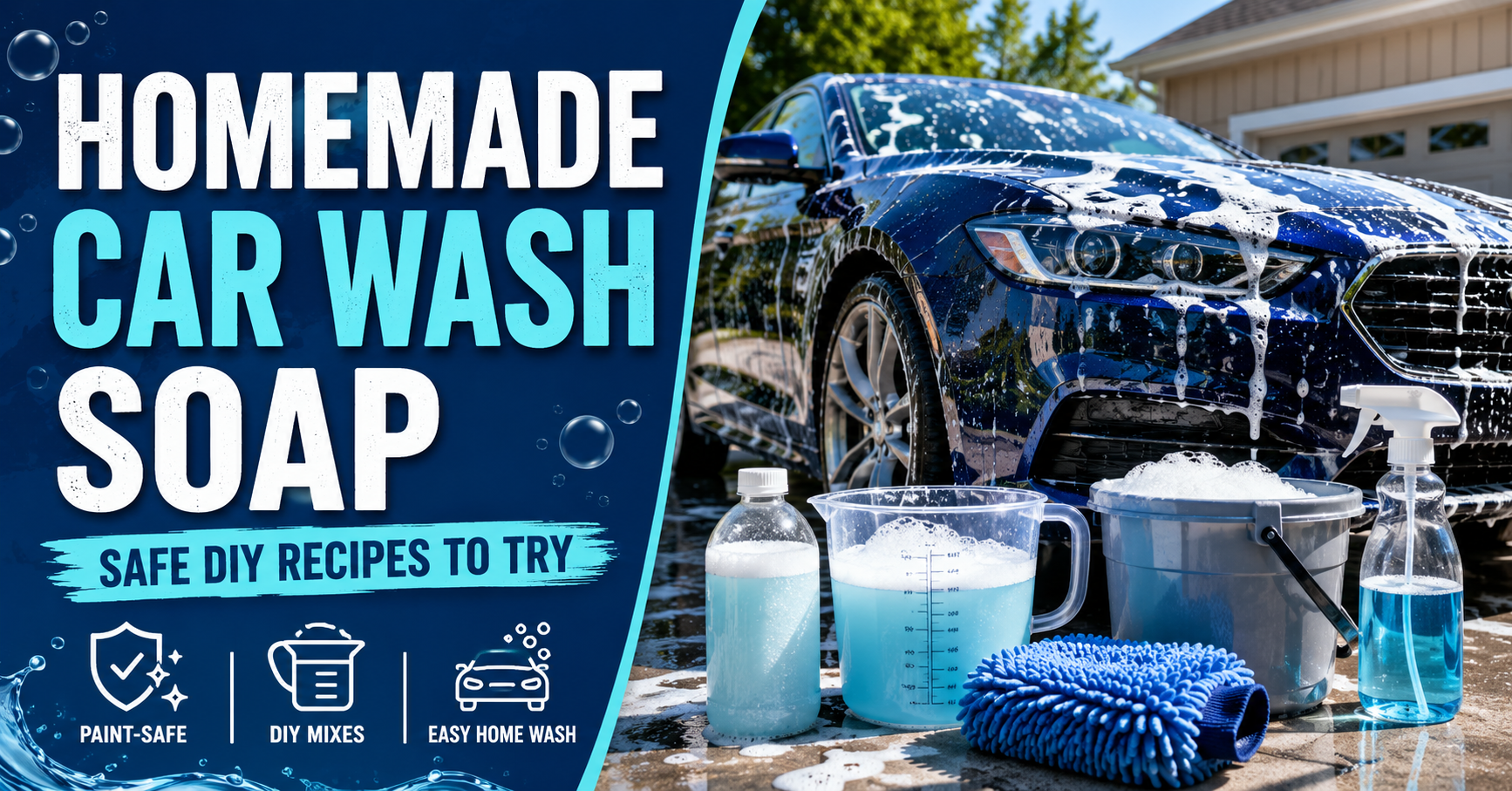
Want to wash your car at home without damaging the paint? Homemade car wash soap can be useful in a pinch, but it must be mixed carefully. The wrong cleaner can strip wax, dull trim, leave residue, or create swirl marks. This guide explains safe DIY car wash soap recipes, what ingredients to avoid, and how to wash your vehicle the right way.
Is Homemade Car Wash Soap Safe for Cars?
Homemade car wash soap can be safe when it is mild, well-diluted, and used on a vehicle that is not heavily contaminated. However, it is important to understand one thing first: a dedicated automotive shampoo is still the best choice for regular washing. Car wash soaps are made to clean dirt while protecting wax, sealant, ceramic coating, rubber trim, and clear coat.
DIY soap should be used as a temporary or budget-friendly option, not as a permanent replacement for quality car shampoo. If your car has expensive paint protection, fresh wax, matte paint, vinyl wrap, or ceramic coating, it is safer to use a product designed specifically for automotive finishes.
Ingredients You Should Avoid
Before making homemade car wash soap, it is important to know what not to use. Some household cleaners are too harsh for automotive paint.
- Dish soap: It can strip wax and protective coatings when used often.
- Laundry detergent: Too strong for clear coat and trim.
- Bleach: Can damage paint, rubber, plastic, and metal surfaces.
- Ammonia-based cleaners: Unsafe for tinted windows and some interior materials.
- Baking soda paste: Can be abrasive if rubbed on paint.
- Vinegar on paint: Can reduce wax protection and may leave spots if not rinsed properly.
The goal is to create a gentle, slippery soap solution that lifts dirt without stripping protection or scratching the surface.
Recipe 1: Mild Baby Shampoo Car Wash Soap
This is one of the gentlest DIY options for lightly dirty vehicles. Baby shampoo is usually mild and easy to rinse, making it a better emergency choice than dish soap.
Ingredients:
- 1 gallon of clean water
- 1 tablespoon of mild baby shampoo
- Optional: 1 extra gallon of water for rinsing your wash mitt
How to Use:
Mix the baby shampoo into a bucket of water. Rinse the car first to remove loose dirt. Dip a clean microfiber wash mitt into the solution and wash the vehicle from top to bottom. Rinse each section before the soap dries. Dry with a clean microfiber towel.
Best for: Light dust, pollen, and regular maintenance washes.
Recipe 2: Gentle Castile Soap Car Wash Mix
Unscented liquid castile soap can be used in a very diluted form. It is plant-based and usually milder than strong detergents, but too much can leave residue, so keep the mixture light.
Ingredients:
- 1 gallon of water
- 1 teaspoon to 1 tablespoon of unscented liquid castile soap
How to Use:
Add the castile soap to water and mix gently. Do not overuse the soap. Pre-rinse your car thoroughly, then wash using a soft microfiber mitt. Rinse very well to prevent streaks or film. Dry the car immediately after rinsing.
Best for: Light cleaning when you want a simple, low-foam DIY solution.
Recipe 3: DIY Wheel and Tire Cleaning Soap
Wheels and tires collect brake dust, grime, and road film. You should not use the same mitt or towel on paint after cleaning wheels. This simple mix is safer for basic wheel cleaning, but avoid using it on polished aluminum or delicate wheel finishes without testing first.
Ingredients:
- 1 gallon of warm water
- 1 tablespoon of mild car-safe soap or baby shampoo
- A soft wheel brush
How to Use:
Rinse the wheels first. Dip the wheel brush into the soapy water and gently scrub the tire sidewalls and wheel faces. Rinse thoroughly. Clean one wheel at a time so the soap does not dry on the surface.
Best for: Routine wheel and tire cleaning between deeper washes.
Recipe 4: Quick Bug Spot Pre-Soak
Bug splatter can be difficult to remove, especially after a long highway drive. Instead of scrubbing hard, soften the mess first.
Ingredients:
- 2 cups of warm water
- 1/2 teaspoon of mild baby shampoo
- Clean microfiber towel
How to Use:
Soak a microfiber towel in the mixture and place it over the bug-covered area for a few minutes. This helps loosen the residue. Wipe gently, then rinse the area with clean water. Never scrub dry bug splatter because it can scratch the paint.
Best for: Front bumpers, mirrors, grilles, and license plate areas.
Tips for Washing Your Car Safely at Home
- Always rinse the car before touching the paint.
- Use a microfiber wash mitt, not an old sponge or rough towel.
- Wash from the top down because lower panels are usually dirtier.
- Use a separate mitt or brush for wheels and tires.
- Do not wash in direct sunlight or on hot paint.
- Rinse often so soap does not dry on the surface.
- Dry with clean microfiber towels to prevent water spots.
- Apply spray wax or sealant afterward if your paint protection feels weak.
When You Should Not Use Homemade Car Wash Soap
A DIY car wash soap is not ideal for every situation. Avoid homemade soap if your vehicle is heavily muddy, covered in road salt, coated with tar, freshly painted, wrapped, ceramic coated, or has matte paint. In those cases, use a proper automotive product or visit a professional car wash or detailer.
You should also avoid homemade soap if you are unsure about the ingredients. A cleaner that works well in the kitchen may not be safe for clear coat, rubber seals, plastic trim, chrome, aluminum, or window tint.
Final Thoughts
Homemade car wash soap can work for light cleaning when you use gentle ingredients and proper washing technique. The safest DIY options are mild baby shampoo or highly diluted unscented castile soap. Still, for long-term paint care, a dedicated pH-balanced car shampoo is the better choice.
The key is to be gentle. Use plenty of water, rinse first, avoid harsh cleaners, wash with clean microfiber tools, and dry the vehicle properly. With the right approach, you can keep your car clean at home without harming its shine or protection.