

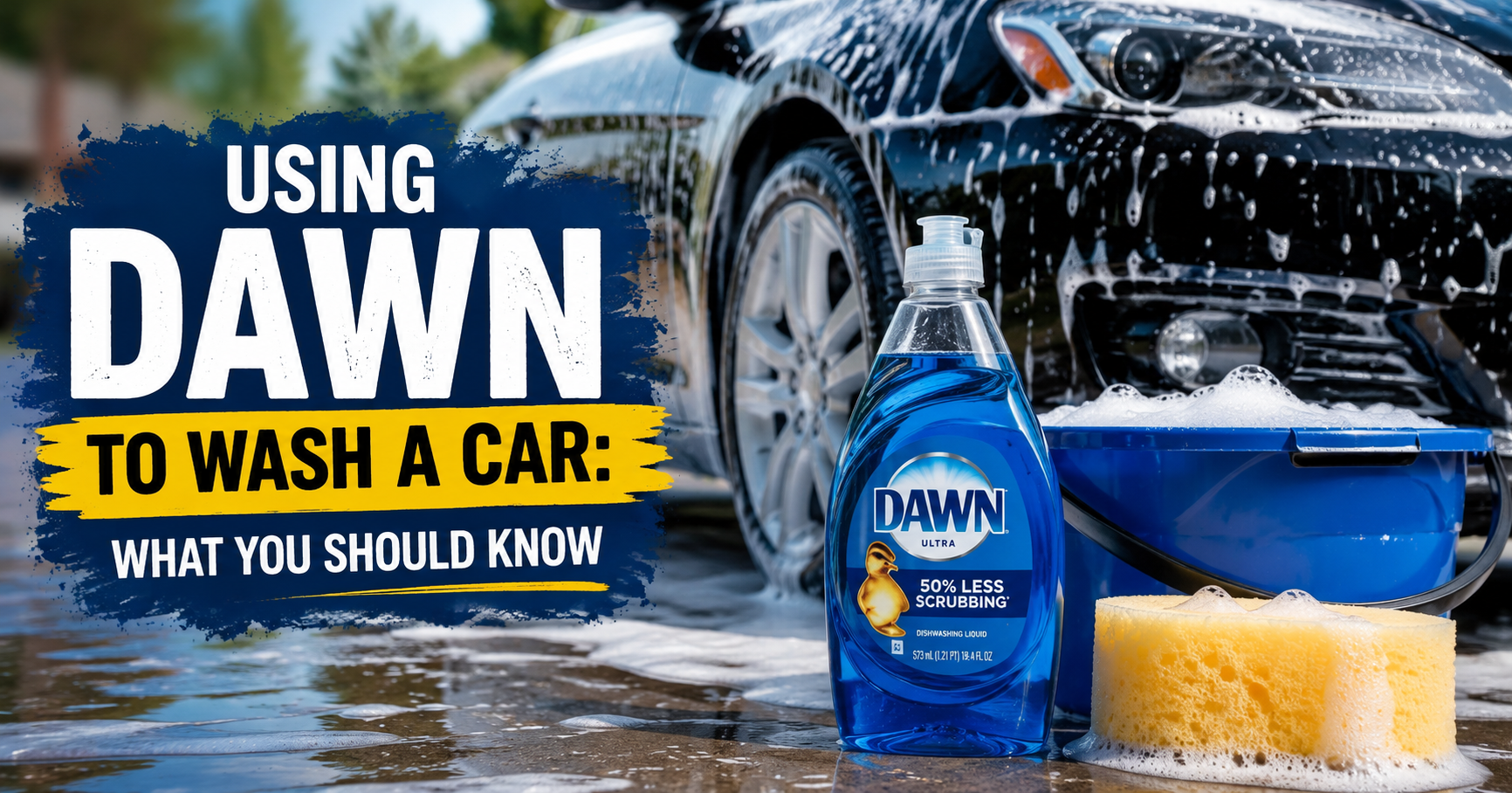
Meta Description: Can you use Dawn dish soap to wash a car? Learn when it is okay, why it is risky for wax and trim, safer alternatives, and the right way to wash your car.
Many car owners have asked the same question at least once: Can I use Dawn to wash my car? Dawn dish soap is affordable, easy to find, and famous for cutting grease. So, when your vehicle is covered in dust, bird droppings, road film, or oily grime, it may seem like a smart shortcut.
The truth is more complicated. Dawn can clean a car, but that does not automatically mean it is the best or safest product for automotive paint. Dish soap is designed for dishes, pans, food grease, and kitchen oils. A car’s exterior is different. It usually has clear coat, wax, sealant, plastic trim, rubber seals, emblems, glass, tires, and sometimes ceramic coating or paint protection film. These surfaces need a cleaner that removes dirt without stripping away protection.
In this guide, we will explain what happens when you use Dawn on a car, when it may be acceptable, when you should avoid it, and what to use instead. You will also learn the correct way to wash your vehicle at home without scratching the paint or damaging the finish.
Quick Answer: Can You Use Dawn to Wash a Car?
Yes, you can technically use Dawn to wash a car, but it is not recommended for regular car washing. Dawn dish soap is a strong degreaser. It can remove dirt, oil, and grime, but it can also strip wax, weaken sealants, reduce paint slickness, and dry out some exterior rubber or plastic surfaces over time.
A single emergency wash with Dawn probably will not destroy your paint. However, using it as your normal car wash soap is a bad habit. For routine washing, a dedicated car wash shampoo is the safer choice because it is made for automotive paint and protective coatings.
Why People Use Dawn on Cars
Dawn is popular because it is powerful, cheap, and already available in many homes. People often reach for it because they believe more suds and stronger grease-cutting power mean a cleaner car. In some situations, Dawn really does remove stubborn grime quickly.
Common reasons people use Dawn include:
- They ran out of car wash soap.
- The vehicle has greasy road film or oily residue.
- They want to remove old wax before polishing or applying new protection.
- They believe dish soap is gentle because it is used by hand in the kitchen.
- They want a low-cost alternative to automotive shampoo.
The problem is that a product can be safe for dishes and still be too aggressive for repeated use on a vehicle. Dawn is excellent at removing oils. Unfortunately, waxes and many paint protectants also rely on oily or hydrophobic properties to protect the surface. That is where the issue begins.
What Dawn Does to Car Wax and Paint Protection
The biggest concern with Dawn is not usually the paint itself. Modern car paint has a clear coat that is tougher than older single-stage finishes. The bigger concern is what sits on top of that paint: wax, sealant, glaze, or other protective layers.
Dawn is formulated to break down grease and oils. When used on a car, it can reduce or remove protective wax and sealant. Once that protection is weakened, the paint becomes more exposed to sunlight, water spots, bird droppings, tree sap, road salt, bug residue, and environmental contaminants.
According to widely shared car-care guidance from automotive and consumer maintenance sources, household cleaners such as dish detergent are not formulated for vehicle paint and may strip protective wax. Dedicated car wash products are generally milder and designed for automotive finishes.
Will Dawn Damage Car Paint?
Dawn will not usually melt paint, remove clear coat in one wash, or instantly ruin a vehicle. That is one reason the myth continues. Someone washes their car with Dawn, sees a clean result, and assumes it is perfectly safe.
However, repeated use can create problems indirectly. When wax and sealant are stripped away, the finish loses protection. The surface may feel less slick, water may stop beading, and the paint can become more vulnerable to oxidation, staining, and dullness. If the car is washed with a rough sponge or dirty towel at the same time, scratches and swirl marks become an even bigger risk.
So the better question is not, “Will Dawn destroy my paint today?” The better question is, “Does Dawn help preserve my paint long-term?” For regular washing, the answer is no.
Dawn vs. Car Wash Soap: What Is the Difference?
Dish soap and car wash soap may both create suds, but they are made for different jobs.
| Feature | Dawn Dish Soap | Dedicated Car Wash Soap |
|---|---|---|
| Main purpose | Cut kitchen grease and food oils | Clean automotive paint safely |
| Effect on wax | Can strip or weaken wax | Usually wax-safe when used correctly |
| Lubrication | Not optimized for paint washing | Designed to help mitt glide over paint |
| Routine use | Not recommended | Recommended |
| Best use | Emergency or wax-stripping prep | Regular maintenance washing |
The key difference is lubrication and surface compatibility. Car wash shampoos are designed to lift dirt while reducing friction between your wash mitt and the paint. This matters because most wash-related scratches happen when dirt is dragged across the surface. A good car shampoo helps reduce that risk.
When Using Dawn on a Car May Be Acceptable
Although Dawn is not ideal for routine washing, there are a few situations where some car owners and detailers may use dish soap carefully.
1. Emergency Washing
If your car is covered in something harmful and you have no car wash soap available, a small amount of Dawn diluted in water may be better than leaving the contamination on the paint. Bird droppings, bug splatter, tree sap, and road salt can damage a finish if ignored.
In this case, use Dawn only as a temporary solution. Afterward, rinse thoroughly and apply wax, spray sealant, or another paint protectant as soon as possible.
2. Removing Old Wax Before Detailing
Some people use Dawn before polishing, claying, or applying a new wax or sealant because they want to remove older protection. This is not the same as maintenance washing. It is a preparation step.
Even then, many modern detailers prefer dedicated strip-wash products, panel prep sprays, or paint decontamination products because they are designed for automotive surfaces. Dawn can work in a basic sense, but it is not the most controlled or professional option.
3. Cleaning Extremely Greasy Areas
Dawn may help clean oily residue in limited areas, such as a greasy door jamb or a dirty engine-bay plastic cover. However, you should avoid letting it dry on paint, rubber, or trim. Use it sparingly, rinse well, and avoid using it on hot surfaces.
When You Should Not Use Dawn on a Car
You should avoid using Dawn as your main car wash soap in most normal situations. It is especially unwise if:
- Your car has fresh wax, sealant, or ceramic spray coating.
- You recently paid for professional detailing.
- Your vehicle has dry, faded, or unprotected plastic trim.
- You wash your car frequently.
- You own a classic car with delicate or older paint.
- You do not plan to reapply protection after washing.
If the goal is to keep your paint glossy and protected, Dawn is the wrong product for regular washing.
Can Dawn Damage Plastic Trim and Rubber Seals?
Repeated use of strong household detergents may dry out exterior rubber and plastic over time. Trim pieces, window seals, weatherstripping, and unpainted plastic can become faded or less flexible if they are repeatedly exposed to harsh cleaners and not protected afterward.
This does not mean one careful wash will cause your trim to crack overnight. But if you wash with Dawn every week, skip protection, and let soap dry on the vehicle in sunlight, you increase the chance of long-term appearance problems.
What to Do If You Already Washed Your Car with Dawn
If you already washed your car with Dawn, do not panic. One wash is usually not a disaster. The smart move is to restore protection.
- Rinse the vehicle thoroughly. Make sure no soap remains in mirrors, emblems, door handles, trim gaps, or around badges.
- Dry with a clean microfiber towel. Do not let water dry naturally if you want to avoid water spots.
- Check the paint slickness. If the paint feels grabby or dry, the wax may have been reduced.
- Apply protection. Use a spray wax, liquid wax, paint sealant, or ceramic spray according to the product instructions.
- Use proper car shampoo next time. This will help maintain the protection you just applied.
Best Alternatives to Dawn for Washing a Car
Instead of Dawn, use a product made specifically for cars. The right option depends on your washing style and the condition of your vehicle.
1. pH-Balanced Car Wash Shampoo
This is the best choice for most people. A pH-balanced shampoo cleans dirt while being gentle on wax, sealants, and coatings. It also provides better lubrication than dish soap.
2. Wash-and-Wax Soap
Wash-and-wax products add a small amount of gloss and protection while washing. They are not a replacement for proper waxing, but they are useful for quick maintenance.
3. Rinseless Wash
A rinseless wash is useful if you have limited access to water. It is popular for apartment dwellers, winter washing, and light dirt. Use plenty of clean microfiber towels and follow the dilution instructions carefully.
4. Waterless Wash Spray
A waterless wash can work for lightly dusty vehicles, but it is not ideal for heavy mud or gritty dirt. Use it only when the car is not heavily soiled, and always use clean microfiber towels.
5. Dedicated Strip Wash
If your goal is to remove old wax before polishing or applying a new coating, use an automotive strip wash instead of dish soap. It is designed for that purpose and gives more predictable results.
Tools You Need for a Safe Car Wash
Good technique matters just as much as good soap. To wash your car safely at home, gather these tools:
- Two clean buckets
- Grit guards if available
- pH-balanced car wash shampoo
- Microfiber wash mitt
- Separate wheel brush or wheel mitt
- Microfiber drying towel
- Hose or pressure washer
- Wheel cleaner if needed
- Spray wax or sealant for protection
Do not use an old kitchen sponge, bath towel, dirty rag, or stiff brush on paint. These can create swirl marks and scratches.
How to Wash Your Car the Right Way
Here is a safe step-by-step method for washing your car at home.
Step 1: Park in the Shade
Never wash a hot car in direct sunlight if you can avoid it. Heat causes soap and water to dry too quickly, which can leave streaks and water spots. Wash in the shade or during cooler parts of the day.
Step 2: Rinse the Car Thoroughly
Start with a full rinse from top to bottom. This removes loose dirt and reduces the chance of scratching during contact washing.
Step 3: Clean Wheels First
Wheels are often the dirtiest part of the vehicle. Brake dust and road grime can be abrasive. Clean wheels with separate tools so you do not transfer that grime to the paint.
Step 4: Use the Two-Bucket Method
Fill one bucket with clean soapy water and the other with plain rinse water. After washing a section, rinse the mitt in the plain water bucket before loading it with soap again. This helps keep dirt out of your wash solution.
Step 5: Wash From Top to Bottom
The lower panels are usually the dirtiest. Start with the roof, glass, hood, and upper doors, then work downward. Use straight-line motions rather than aggressive circular scrubbing.
Step 6: Rinse Often
Do not let soap dry on the surface. Rinse each section as needed, especially in warm weather.
Step 7: Dry With Microfiber
Dry the vehicle with a clean microfiber drying towel. Letting water air-dry can leave mineral spots, especially if your water is hard.
Step 8: Add Protection
After washing, apply spray wax, sealant, or ceramic spray if the surface no longer beads water well. Protection makes future washes easier and helps preserve gloss.
How Often Should You Wash Your Car?
Most vehicles should be washed every one to four weeks, depending on weather, driving conditions, and storage. If you drive on salted roads, park under trees, live near the ocean, or frequently encounter bugs and bird droppings, you may need to wash more often.
Regular washing is not just about appearance. Dirt, salt, and acidic contamination can shorten the life of your vehicle’s exterior surfaces. The key is to wash safely with the right products.
Common Mistakes to Avoid
Whether you use Dawn once or switch to proper car wash soap, avoid these common mistakes:
- Using dish soap regularly: It can strip wax and reduce protection.
- Washing in direct sun: Soap and water may dry too quickly.
- Using one bucket: Dirt stays in the wash water and can scratch paint.
- Using household towels: They can be too rough for clear coat.
- Scrubbing hard: Let soap and lubrication do the work.
- Ignoring wheels: Brake dust can build up and damage wheel finishes.
- Skipping protection: Clean paint without wax or sealant is more exposed.
Is Dawn Good for Removing Bugs, Tar, or Sap?
Dawn may help with light oily residue, but it is not the best solution for bugs, tar, or tree sap. These contaminants often require dedicated products.
For bug residue, use a bug remover or pre-soak product. For tar, use a tar remover. For tree sap, use a safe automotive sap remover or isopropyl alcohol carefully on a small area, followed by washing and reapplying protection. Always follow the product instructions and test in an inconspicuous area first.
Should You Use Dawn Before Waxing a Car?
Some people use Dawn before waxing because they want a clean surface. However, washing alone does not fully prepare paint for wax. If the paint has embedded contamination, oxidation, or old residue, you may need additional steps such as clay bar treatment, polishing, or a dedicated paint prep product.
If your car is already in good condition and you simply want to apply fresh wax, use car shampoo first. If you need to remove old wax, a dedicated automotive prep wash is usually better than Dawn.
Can You Use Dawn in a Foam Cannon?
You should not use Dawn as a regular foam cannon soap. It may create foam, but it is not designed for automotive foam cannons or paint-safe washing. Foam cannon soaps are made to cling, lubricate, and rinse clean while being safer for wax and coatings.
If you want thick foam, choose a high-foaming car shampoo. It will be safer and more effective for routine washes.
Can Dawn Remove Ceramic Coating?
Dawn is unlikely to completely remove a true professional ceramic coating in one wash, but it can leave residues, reduce slickness, and interfere with the coating’s water behavior. It may also weaken or remove ceramic spray toppers or waxes layered over the coating.
If your car has a ceramic coating, use a coating-safe car shampoo. These products are designed to clean without clogging or degrading the coating’s performance.
Practical Recommendation for The Average Car Owner
If you care about your car’s appearance, resale value, and long-term finish, do not use Dawn as your normal wash soap. Keep a bottle of quality car wash shampoo in your garage. It does not have to be expensive, and it will last for many washes when diluted properly.
Use Dawn only in rare cases, such as an emergency or a deliberate wax-stripping step before a more complete detailing process. If you do use it, rinse thoroughly and reapply paint protection afterward.
FAQ: Using Dawn to Wash a Car
Is Dawn safe for car paint?
Dawn is not ideal for car paint maintenance. One wash will usually not ruin paint, but repeated use can strip wax and reduce protection.
Will Dawn remove car wax?
Yes, Dawn can weaken or remove car wax because it is designed to cut grease and oils. That is one reason it is not recommended for routine washing.
Can I use Dawn if I ran out of car soap?
You can use a small amount in an emergency, but rinse thoroughly and apply wax or sealant afterward. Replace it with proper car shampoo as soon as possible.
What soap is best for washing a car?
A pH-balanced car wash shampoo is best for regular washing. It is designed to clean automotive paint without stripping protection.
Can Dawn clean tires and wheels?
Dawn can clean light grime from wheels and tires, but dedicated wheel and tire cleaners usually work better. Always use separate tools for wheels and paint.
Should I use Dawn before applying ceramic coating?
For ceramic coating prep, use proper decontamination and panel prep products. Dawn alone is not enough for professional coating preparation.
Does Dawn leave residue on cars?
It can if not rinsed thoroughly. Any soap residue can cause streaking or interfere with paint protection products.
How do I fix my car after washing it with Dawn?
Rinse thoroughly, dry with microfiber, and apply wax, sealant, or ceramic spray to restore protection.
Final Verdict: Should You Wash Your Car With Dawn?
Dawn is a powerful dish soap, but your car is not a dinner plate. While it can remove dirt and grease, it can also remove the protective wax or sealant that helps keep your paint glossy and safe. For one emergency wash, it is usually not the end of the world. For regular car care, it is the wrong tool.
The best approach is simple: use a dedicated car wash soap, wash with the two-bucket method, dry with clean microfiber towels, and keep the paint protected with wax or sealant. Your car will look better, stay cleaner longer, and have a stronger defense against the elements.
Suggested Internal Links for TheTrendyTools.com
- Best Car Wash Soaps for Home Detailing
- How to Use a Foam Cannon Properly
- Best Microfiber Towels for Cars
- Car Wax vs. Paint Sealant: Which Is Better?
- Essential Car Detailing Tools for Beginners
SEO Keywords Used Naturally
Can you use Dawn to wash a car? Dawn dish soap car wash, dish soap on car paint, does Dawn remove car wax, best soap to wash a car, car wash soap alternatives, safe car-washing tips, washing a car at home, car detailing tools.
Editorial note: This article is written for informational purposes. Always follow the instructions on any automotive cleaning product and test unfamiliar products on a small area before full use.