

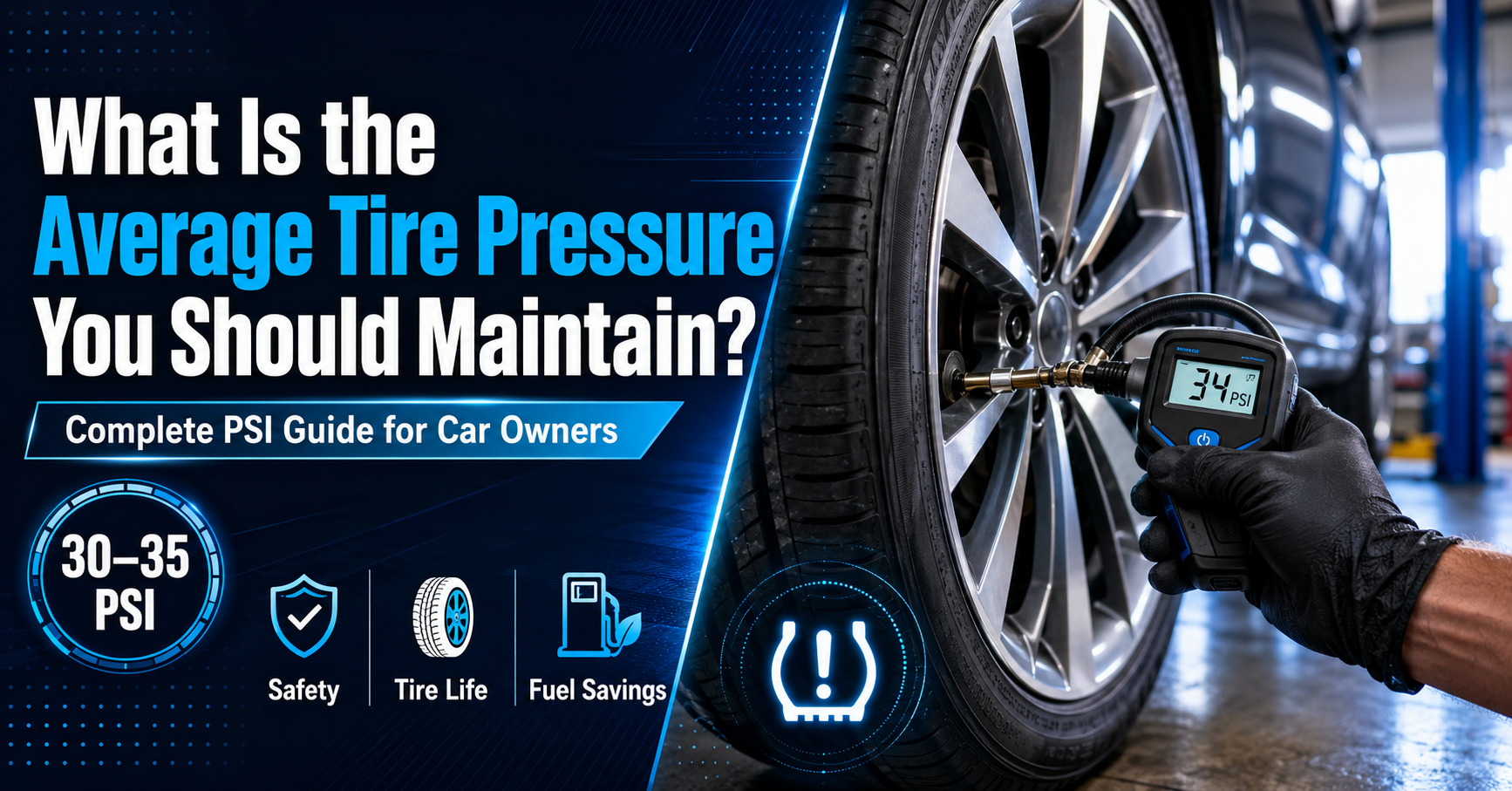
Tire pressure is one of the easiest vehicle maintenance tasks to check, but it is also one of the most commonly ignored. Many drivers wait until the tire pressure warning light appears on the dashboard before thinking about PSI. However, maintaining the right tire pressure can improve safety, fuel economy, tire life, ride comfort, braking, and overall handling.
So, what is the average tire pressure you should maintain? For most regular passenger cars, the average recommended tire pressure is usually between 30 and 35 PSI when the tires are cold. Many sedans, hatchbacks, and small crossovers commonly fall around 32 to 35 PSI. Larger SUVs, vans, and light trucks may require higher pressure, often around 35 to 45 PSI, depending on the vehicle and load.
However, tire pressure should never be based only on an average. The correct PSI for your vehicle is the number listed on the tire information sticker inside the driver’s door jamb or in the owner’s manual. That number is chosen by the vehicle manufacturer for safe everyday driving.
In this complete guide, we will explain the average tire pressure most drivers should know, where to find your correct PSI, why cold tire pressure matters, what happens when tires are overinflated or underinflated, how often to check tire pressure, and how to maintain your tires properly throughout the year.
What Does Tire Pressure Mean?
Tire pressure is the amount of air inside a tire. It is usually measured in PSI, which stands for pounds per square inch. This number tells you how much air pressure is supporting the tire and helping it carry the weight of the vehicle.
A tire is not just a round piece of rubber. It is a carefully engineered part of your vehicle’s safety system. It supports weight, absorbs road impact, provides traction, helps with steering, and plays a major role in braking performance. When tire pressure is correct, the tire keeps the proper shape and the tread contacts the road evenly.
When tire pressure is too low, the tire becomes softer and more of the tread touches the road than intended. When pressure is too high, the tire becomes too firm and may not contact the road evenly. Both conditions can affect performance, comfort, and safety.
What Is the Average Tire Pressure You Should Maintain?
The average tire pressure for most passenger cars is generally 30 to 35 PSI. This is the range many drivers will see on their vehicle’s tire information placard. A common recommendation for many everyday cars is around 32 PSI, while others may recommend 33, 34, or 35 PSI.
Here is a general guide:
| Vehicle Type | Common Average Tire Pressure Range |
|---|---|
| Compact cars | 30–33 PSI |
| Midsize sedans | 32–35 PSI |
| Hatchbacks | 30–35 PSI |
| Crossovers | 32–36 PSI |
| SUVs | 35–40 PSI |
| Light trucks | 35–45 PSI or higher depending on load |
| Compact spare tires | Often around 60 PSI |
This table is only a general reference. Your vehicle may require a different number. Always use the pressure recommended by your vehicle manufacturer.
Why the Correct PSI Matters More Than the Average
Average tire pressure is useful for general understanding, but it is not the number you should blindly use. Two vehicles can use similar-looking tires but require different pressures because of weight, suspension design, tire size, load capacity, and performance requirements.
For example, a compact car may work best at 32 PSI, while a larger SUV may need 36 PSI or more. A pickup truck carrying heavy cargo may need even higher pressure in the rear tires. Some vehicles also recommend different pressure for the front and rear tires.
The correct PSI is selected by the vehicle manufacturer after testing. It is designed to balance safety, comfort, fuel efficiency, tire wear, and handling. That is why the best answer is: maintain the PSI listed on your vehicle’s door sticker, even if it is slightly different from the average range.
Where to Find the Correct Tire Pressure for Your Vehicle
The easiest place to find the correct tire pressure is the sticker inside the driver’s door jamb. Open the driver’s door and look along the door frame or pillar. This sticker is often called the tire information placard.
The tire information placard usually includes:
- Recommended front tire pressure
- Recommended rear tire pressure
- Original tire size
- Vehicle load information
- Spare tire pressure, in some vehicles
You can also check the owner’s manual. Some vehicles list different tire pressures for normal driving, high-speed driving, towing, or carrying a full load of passengers and cargo.
If the sticker is missing or unreadable, search the owner’s manual or contact the vehicle manufacturer or a trusted tire professional. Do not guess based only on the tire size.
Do Not Use the Tire Sidewall PSI as Your Normal Pressure
One of the biggest tire pressure mistakes is using the number printed on the tire sidewall. Many tires show numbers such as 44 PSI, 50 PSI, or more. This number is usually the tire’s maximum cold inflation pressure, not the recommended pressure for your vehicle.
For example, your tire may say the maximum pressure is 44 PSI, but your vehicle may recommend 32 PSI. In that case, 32 PSI is the correct normal pressure for everyday driving.
Inflating tires to the sidewall maximum when it is not required can create a harsh ride, reduce traction, increase center tread wear, and affect handling. The sidewall information is important, but it is not the same as your vehicle’s recommended PSI.
What Is Cold Tire Pressure?
Recommended tire pressure is usually based on cold tire pressure. Cold tire pressure means the tire pressure before the tires have warmed up from driving.
A tire is generally considered cold when the vehicle has been parked for at least three hours or has been driven only a very short distance. This matters because air expands when it heats up. As you drive, the tires warm up and the pressure inside them rises.
If your recommended tire pressure is 35 PSI, that means 35 PSI when the tire is cold. After driving, the same tire may read 37 or 38 PSI. That does not always mean the tire is overinflated. It may simply be warm from driving.
For the most accurate reading, check tire pressure in the morning before driving or after the vehicle has been parked for several hours.
How Often Should You Check Tire Pressure?
Car owners should check tire pressure at least once a month and before long road trips. Tires can naturally lose small amounts of air over time, even if there is no visible puncture. Weather changes can also affect pressure.
You should also check tire pressure when:
- The tire pressure warning light turns on
- The outside temperature drops suddenly
- You are preparing for a road trip
- You are carrying heavy cargo
- You are towing a trailer
- The vehicle feels unstable
- A tire looks lower than the others
- You hit a pothole or curb
- You notice uneven tire wear
Do not rely only on the dashboard warning light. A tire pressure monitoring system is helpful, but it may not alert you until the pressure is already significantly low. A manual tire pressure gauge is still one of the best tools for regular maintenance.
How to Check Tire Pressure Correctly
Checking tire pressure takes only a few minutes. You will need a tire pressure gauge. Digital gauges, dial gauges, and stick gauges can all work, as long as they are accurate and easy to read.
Step 1: Find Your Recommended PSI
Look at the tire pressure sticker inside the driver’s door jamb. Write down the recommended pressure for the front and rear tires.
Step 2: Check Tires When Cold
Check pressure before driving or after the car has been parked for a few hours. This gives the most accurate reading.
Step 3: Remove the Valve Cap
Unscrew the valve cap from the tire valve stem. Keep it somewhere safe so it does not roll away.
Step 4: Press the Gauge Onto the Valve Stem
Press the gauge firmly and straight onto the valve stem. If you hear air leaking, adjust the angle and try again.
Step 5: Read the Pressure
Compare the reading to your recommended PSI. If the tire is low, add air. If it is too high, release a small amount of air.
Step 6: Recheck the Pressure
After adding or removing air, check the pressure again to make sure it matches the recommended number.
Step 7: Replace the Valve Cap
Put the valve cap back on tightly. It helps protect the valve from dirt, moisture, and road debris.
What Happens If Tire Pressure Is Too Low?
Low tire pressure is dangerous because it causes the tire to flex more than normal. This creates heat, increases rolling resistance, and can damage the tire structure over time.
Underinflated tires can cause:
- Poor fuel economy
- Slower steering response
- Longer braking distance
- Uneven tread wear on the outer edges
- Extra heat buildup
- Reduced tire life
- Poor handling
- Greater risk of tire failure
A tire does not have to look flat to be underinflated. Modern tires can lose several PSI and still look normal from the outside. That is why checking with a gauge is important.
What Happens If Tire Pressure Is Too High?
Too much air can also create problems. Overinflated tires may ride harshly and reduce the amount of tread contacting the road. This can affect traction and comfort.
Overinflated tires can cause:
- Harsh ride quality
- Reduced road grip
- Uneven tread wear in the center
- More road noise
- Greater sensitivity to potholes
- Less comfortable driving
- Possible handling changes
Some drivers overinflate tires hoping to improve fuel economy, but this is not a good general practice. The safest approach is to follow the manufacturer’s recommendation.
How Temperature Affects Tire Pressure
Tire pressure changes with temperature. When the weather gets colder, tire pressure usually drops. When the weather gets warmer, pressure may rise. This is why many drivers see the tire pressure warning light during cold mornings.
As a general estimate, tire pressure may change by about 1 PSI for every 10-degree Fahrenheit change in temperature. This is not exact for every situation, but it is a useful rule of thumb.
In winter, check tire pressure more often because cold weather can quickly lower PSI. In summer, remember that hot tires can show higher readings after driving. Do not release air from hot tires just because the pressure reading is higher than normal. Recheck when the tires are cold.
Should All Four Tires Have the Same Pressure?
Not always. Some vehicles recommend the same PSI for all four tires, while others recommend different front and rear pressures. For example, a vehicle may require 33 PSI in the front tires and 35 PSI in the rear tires, especially if the rear carries more load.
Different pressures may be recommended because of vehicle weight distribution, suspension design, drivetrain layout, cargo capacity, or handling balance.
If your tire information placard lists different front and rear pressures, follow those numbers. Do not automatically make all four tires the same unless the manufacturer recommends it.
Average Tire Pressure for SUVs and Trucks
SUVs and trucks often require higher tire pressure than compact cars or sedans because they are heavier and may carry more cargo. Many SUVs commonly use pressures around 35 to 40 PSI, while pickup trucks may require 35 to 45 PSI or more depending on load and tire type.
Some trucks have different pressure recommendations for normal driving and heavy-load driving. If you tow trailers, haul tools, carry heavy cargo, or drive a work truck, check the owner’s manual carefully.
Never assume that a truck tire should be inflated like a passenger car tire. Trucks and SUVs often have different load requirements.
Average Tire Pressure for Electric and Hybrid Vehicles
Electric vehicles and hybrids may require different tire pressure than similar gasoline-powered vehicles. EVs can be heavier because of battery packs, and many use special low-rolling-resistance tires designed for efficiency and quiet driving.
Maintaining correct tire pressure is especially important for electric vehicles because tire pressure can affect driving range, tire wear, and handling. Always check the door placard or owner’s manual for the correct PSI.
What About the Spare Tire?
The spare tire is one of the most forgotten parts of tire maintenance. Many drivers do not check it until they have a flat tire. Unfortunately, a spare tire with low pressure may not be safe or useful when needed.
Compact temporary spare tires often require much higher pressure than regular tires, commonly around 60 PSI. Full-size spare tires may use pressure similar to the regular tires. Check your owner’s manual or tire placard for the correct spare tire pressure.
Check the spare tire several times per year and before long trips. If your vehicle uses an inflator kit instead of a spare, make sure the kit is present and not expired.
How Tire Pressure Affects Fuel Economy
Underinflated tires increase rolling resistance. This means the engine has to work harder to move the vehicle, which can reduce fuel economy. When tires are properly inflated, the car rolls more efficiently and uses energy more effectively.
Correct tire pressure will not completely transform fuel economy, but it can help your vehicle perform as designed. Over time, better inflation habits can also reduce tire replacement costs by preventing uneven wear.
For drivers who commute daily or take long trips, maintaining tire pressure is one of the easiest ways to support better fuel efficiency.
How Tire Pressure Affects Tire Wear
Incorrect tire pressure can shorten tire life. Underinflated tires often wear more on the outer shoulders because the edges of the tread carry too much weight. Overinflated tires may wear more in the center because the middle of the tread presses harder against the road.
Uneven tire wear can lead to road noise, vibration, reduced traction, and early tire replacement. Since tires can be expensive, proper pressure is a simple way to protect your investment.
For best results, combine proper tire pressure with regular tire rotation, wheel alignment checks, and suspension inspections.
How Tire Pressure Affects Safety
Tires are the only parts of your vehicle that touch the road. That makes tire pressure a major safety factor. Correct tire pressure helps the vehicle steer, brake, accelerate, and corner as intended.
Proper tire pressure supports:
- Better braking performance
- Stable handling
- Improved steering response
- More predictable cornering
- Lower risk of overheating
- Reduced chance of tire failure
- Better traction in wet conditions
Low tire pressure is especially risky during highway driving because high speed creates heat. Excessive heat can weaken the tire and may lead to serious failure.
What Does the Tire Pressure Warning Light Mean?
The tire pressure warning light is part of the tire pressure monitoring system, commonly called TPMS. The warning symbol often looks like a horseshoe-shaped tire with an exclamation mark in the center.
When this light turns on, it usually means one or more tires may be underinflated. Some vehicles display the pressure for each tire, while others only show a general warning light.
If the light comes on, check tire pressure as soon as safely possible. Inflate the tires to the recommended cold PSI. If the light stays on after adjusting the pressure, the system may need to reset, or there may be a leak or sensor issue.
If the TPMS light flashes before staying on, it may indicate a problem with the monitoring system itself. Check your owner’s manual for the correct meaning for your vehicle.
Can You Drive With Low Tire Pressure?
If a tire is only slightly low, you may be able to drive carefully to a nearby air pump. However, you should not continue normal driving for days or weeks with low pressure. Driving on underinflated tires can damage the tire and make the vehicle less safe.
If a tire is very low, visibly flat, or the car feels unstable, stop driving and inspect the tire. Driving on a severely underinflated tire can damage the sidewall and may ruin the tire permanently.
If a tire keeps losing air after you refill it, have it inspected. There may be a nail, leaking valve stem, cracked wheel, or bead leak.
Best Tools for Maintaining Tire Pressure
You do not need expensive tools to maintain tire pressure. A few basic items can make the job simple.
Tire Pressure Gauge
A reliable tire pressure gauge is the most important tool. Digital gauges are easy to read, dial gauges are durable, and stick gauges are affordable and compact.
Portable Tire Inflator
A portable inflator can be very convenient. Many plug into a 12V outlet or use a rechargeable battery. This allows you to add air at home instead of searching for a gas station pump.
Valve Caps
Valve caps protect the valve stem from dirt and moisture. If one is missing, replace it.
Tread Depth Gauge
While checking pressure, it is also a good idea to inspect tread depth. A tread depth gauge can help you monitor tire wear.
How to Add Air to Your Tires
Adding air is simple, but you should do it carefully to avoid overinflation.
- Check the recommended PSI on the door placard.
- Measure the current tire pressure.
- Attach the air hose to the valve stem.
- Add air in short bursts.
- Recheck the pressure with your gauge.
- Release air if the pressure is too high.
- Replace the valve cap.
If you use a gas station air pump, remember that the built-in gauge may not always be accurate. Keeping your own gauge is a smart habit.
Common Tire Pressure Mistakes to Avoid
Using the Average Instead of the Recommended PSI
The average range is helpful, but your vehicle’s door placard is more important. Always follow the manufacturer’s recommendation.
Using the Sidewall Maximum PSI
The sidewall number is usually the maximum pressure, not the normal driving pressure.
Checking Tires After a Long Drive
Hot tires show higher pressure. Check when tires are cold whenever possible.
Ignoring the Spare Tire
A flat spare is useless in an emergency. Check it regularly.
Relying Only on the TPMS Light
The warning light is helpful, but monthly manual checks are still necessary.
Overinflating for Better Mileage
Too much pressure can reduce traction, increase uneven wear, and make the ride uncomfortable.
Seasonal Tire Pressure Tips
Winter
Cold weather can lower tire pressure quickly. Check pressure more often during winter, especially after sudden temperature drops.
Summer
Hot weather and highway driving can raise tire pressure. Do not release air from warm tires unless you know the cold pressure is too high.
Rainy Weather
Proper inflation helps the tire maintain good contact with the road. This is important for braking and traction on wet roads.
Before Long Trips
Before any long drive, check tire pressure, tread depth, spare tire condition, and visible tire damage.
Quick Tire Pressure Maintenance Checklist
- Check tire pressure once a month.
- Check pressure before long trips.
- Measure when tires are cold.
- Use the driver’s door sticker as your guide.
- Do not use the sidewall maximum as normal pressure.
- Check all four tires.
- Check the spare tire.
- Use a reliable tire pressure gauge.
- Inspect tires for nails, cracks, bubbles, and uneven wear.
- Have repeated air loss checked by a professional.
Frequently Asked Questions
What is the average tire pressure for most cars?
The average tire pressure for most passenger cars is usually 30 to 35 PSI when cold. However, your vehicle’s recommended PSI is the number you should follow.
Is 32 PSI good tire pressure?
Yes, 32 PSI is common for many cars, but it is only correct if your vehicle manufacturer recommends it.
Is 35 PSI too high?
Not necessarily. Many vehicles recommend 35 PSI. It is too high only if your specific vehicle requires a lower pressure.
Is 40 PSI too much?
For many passenger cars, 40 PSI may be higher than recommended. For some SUVs, trucks, or loaded vehicles, it may be normal. Check the door placard.
Should I inflate tires to the number on the tire sidewall?
No. The sidewall number is usually the maximum pressure, not the recommended daily driving pressure.
Should tire pressure be checked hot or cold?
Cold is best. Check before driving or after the vehicle has been parked for at least a few hours.
Why does tire pressure drop in cold weather?
Cold air contracts, which lowers the pressure inside the tire. This is why TPMS lights often turn on during cold mornings.
How often should I add air to my tires?
Add air whenever the pressure is below the recommended PSI. Check at least once a month.
Can wrong tire pressure damage tires?
Yes. Low or high pressure can cause uneven wear, heat buildup, poor handling, and shorter tire life.
Does proper tire pressure improve fuel economy?
Yes. Properly inflated tires reduce rolling resistance and help your vehicle operate more efficiently.
Final Thoughts
The average tire pressure you should maintain for most passenger cars is usually around 30 to 35 PSI. However, the most accurate answer is always found on your vehicle’s tire information placard or in the owner’s manual. That number is selected specifically for your vehicle’s weight, tire size, handling, comfort, and safety.
Maintaining correct tire pressure is one of the simplest and most affordable ways to care for your car. It can improve fuel economy, extend tire life, support better handling, and reduce the risk of tire problems on the road.
Check your tires at least once a month, measure pressure when the tires are cold, use a reliable gauge, and never ignore a tire pressure warning light. A few minutes of maintenance can make your car safer, smoother, and more efficient every time you drive.